
Plants
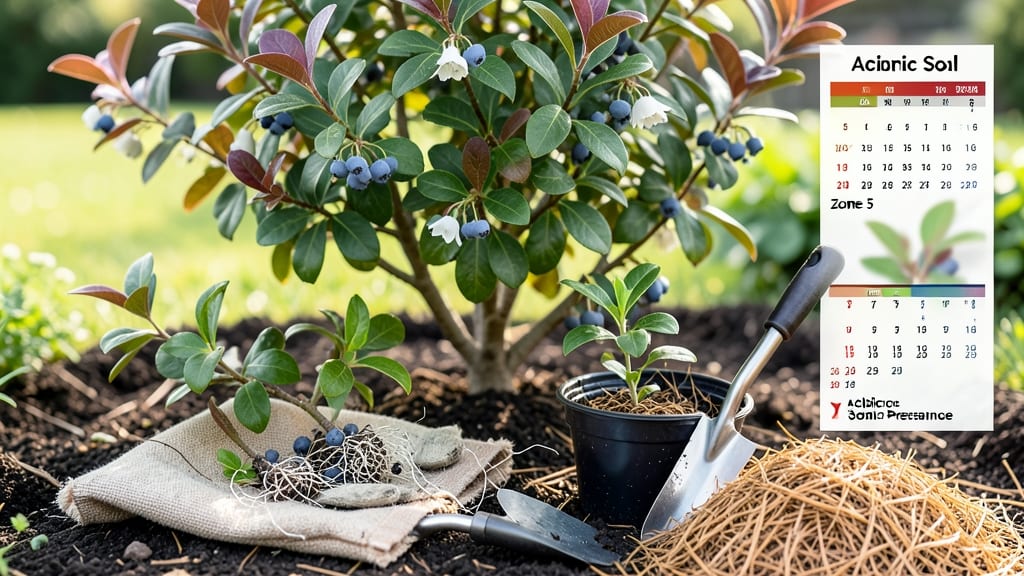
Planting blueberries in Zone 5 at the wrong time can mean the difference between a thriving bush and one that struggles to survive your region’s harsh winters. These delicate 🫐 shrubs need careful timing to establish strong roots before the first frost hits—usually by mid-October in 5a-5b climates.
Most gardeners swear by early spring or fall planting, but each season comes with its own challenges. Spring gives your blueberries a head start, while fall planting lets them settle in before winter dormancy.
Either way, you’ll want to avoid the late spring heat or early fall frosts that can shock young plants.
I’ll walk you through the exact frost-free window for Zone 5, including soil prep tips and how to choose between container and in-ground planting for flexibility. Whether you’re a beginner or a seasoned gardener, getting this timing right is the key to sweet, bountiful harvests by mid-summer.
Ready to plant with confidence? Let’s break down the best months, microclimate tricks, and how to protect your bushes from Zone 5’s unpredictable weather patterns.
Best planting window for blueberries in Zone 5: month-by-month breakdown
Zone 5’s 150 frost-free days create a tight window for planting blueberries, but timing directly impacts root development and winter survival. The ideal soil temperature for transplanting is between 40°F and 60°F, which occurs in early spring (April) or early fall (September-October) in most 5a-5b regions.
For bare-root blueberries, aim to plant 4-6 weeks before your first frost (typically by mid-October) or immediately after the last frost in mid-May. Container-grown bushes offer more flexibility but still need proper soil prep and moisture management during these critical windows.
Let’s break down the month-by-month timeline for Zone 5, including soil prep, moisture needs, and how to prepare your planting site for maximum success.
| Month | Best Planting Time | Soil Prep | Moisture Needs | Key Considerations |
|---|---|---|---|---|
| March | Late March (bare-root only) | Amend soil with peat moss, adjust pH to 4.5-5.5 | Keep soil moist (1-2 gallons/week) | Frost risk remains; protect with mulch |
| April | Ideal window (after last frost) | Add compost + sulfur for acidity | Deep water 2x/week (1-2 gallons) | Best root establishment; monitor for pests |
| May | Last chance for spring | Test pH; add lime if too acidic | Water daily during heatwaves | Avoid late May planting (heat stress risk) |
| September | Prime fall window | Add organic mulch (pine needles) | Reduce watering gradually | Plant 6+ weeks before first frost |
| October | Final fall opportunity | Double-check soil moisture | Water lightly (avoid soggy soil) | Mulch heavily to insulate roots |
Spring planting (April) gives your blueberries 60-90 days of warm weather to establish roots before winter dormancy. This is ideal for container-grown bushes or if you missed the fall window.
The key is to plant as soon as the soil warms to 50°F+ and protect young plants with 3-4 inches of mulch by late fall.
Fall planting (September-October) lets bushes settle in before winter, but you must finish 4-6 weeks before ground freezes. I recommend planting in early September for Zone 5a and late September for Zone 5b to avoid early frosts.
Water deeply after planting and monitor soil moisture—fall rains can lead to waterlogged roots if drainage is poor.
For container planting, the window extends slightly later into fall since pots retain heat longer. Just ensure your container has drainage holes and use a lightweight potting mix with added peat moss to maintain acidity. Move containers to a sheltered spot before winter to prevent frost damage.
Pro tip: Use a soil thermometer to confirm temperatures—blueberries won’t thrive if planted in cold, wet soil. Aim for 50°F+ for spring and 55°F+ for fall for best results.
How to choose between spring vs. fall planting for Zone 5 blueberries
Deciding whether to plant your blueberries in spring or fall for Zone 5 hinges on two key factors: root establishment and winter survival. Both seasons have advantages, but each comes with risks if mishandled.
Let’s weigh the pros and cons so you can pick the best time for your climate.
Spring planting gives your blueberry bushes a full growing season to establish roots before winter. However, late spring heatwaves can stress young plants, especially if they’re not yet hardened off.
Fall planting, on the other hand, lets them settle in before dormancy, but early frosts can damage tender roots if planted too late.
Zone 5’s last frost typically occurs around mid-May, while the first frost hits by mid-October. Aim to plant 4-6 weeks before either of these dates to give your bushes time to adapt. For spring, this means late April to early May; for fall, late August to early September.
Spring Planting
- Pros: Full growing season for root growth
- Easier to monitor soil moisture
- Less risk of winter damage
Cons:
- Late heatwaves can stress young plants
- Requires consistent watering
- Slower establishment in heavy clay soils
Fall Planting
- Pros: Bushes establish roots before winter
- Less competition from weeds
- Cooler temps reduce transplant shock
Cons:
- Early frosts can damage tender roots
- Limited time for root growth before dormancy
- Harder to assess soil moisture in fall
If you’re unsure which season works best, consider your local microclimate. South-facing slopes warm up faster in spring, while sheltered spots may protect fall plantings from early frosts. For container-grown blueberries, fall planting often works better—they’re easier to move indoors if frost threatens.
One critical tip for both seasons: always mulch heavily after planting to insulate roots. Use 4-6 inches of pine needles or wood chips—these also help maintain the acidic soil pH blueberries crave. Avoid synthetic mulches, which can raise soil pH over time.
No matter which season you choose, avoid planting during extreme weather. Skip late spring if temperatures consistently exceed 80°F, and steer clear of fall if frosts are forecasted within 2 weeks of planting. Your blueberries will thank you with stronger growth and bigger harvests next summer!