
Plants
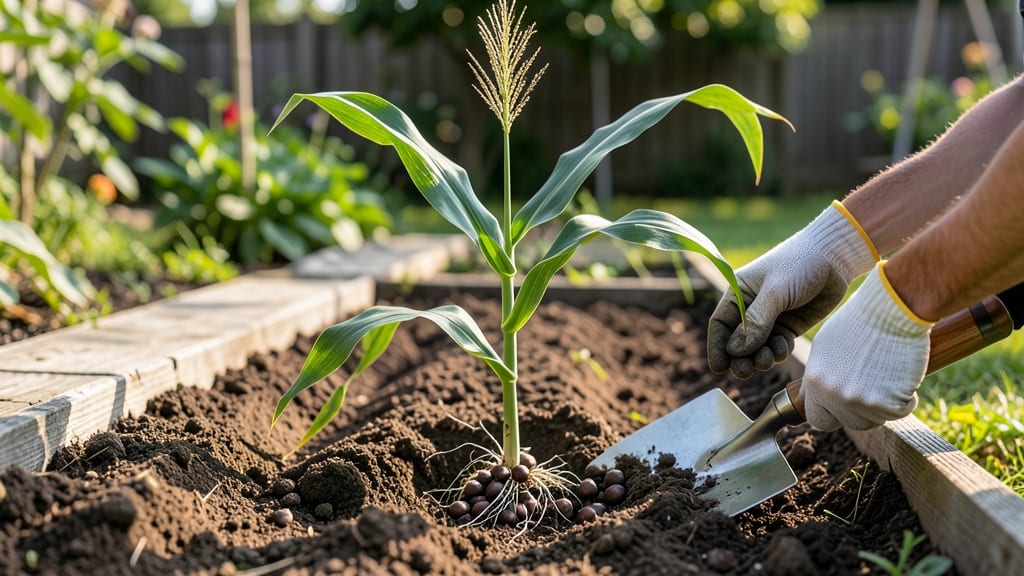
Timing your corn planting just right in Upstate New York could mean the difference between a bumper crop of sweet 🌽 and a sad, frost-nipped disappointment.
The perfect window—late April to mid-May—balances warming soil, fading frost risks, and the plant’s need for 60-90 days to mature before the first frost hits.
But here’s the catch: not all of Upstate NY’s 5b-6b zones play by the same rules. Western NY’s warmer microclimates might let you push planting to early May, while the Adirondacks demand earlier starts to squeeze in a full season.
I’ll break down how to read your local frost dates like a pro and adjust for your exact corner of the region.
You’ll also discover which fast-maturing corn varieties thrive here—like ‘Golden Bantam’ or ‘Ambrosia’—and how to tweak your schedule for early or late varieties. Plus, I’ll share my go-to tricks for soil prep and companion planting to give your corn the best shot at reaching that 8-foot-tall glory.
Ready to turn your garden into a cornfield goldmine? Let’s dive into the frost-date math that’ll have your ears popping with flavor from July to September.
Upstate NY corn planting dates by microclimate zones
Upstate NY's diverse geography means planting dates vary dramatically between the Adirondacks, Central NY, and Western NY. The USDA Hardiness Zones 4b-6a create microclimates where a 2-week difference can mean the difference between a bountiful harvest and frost-nipped seedlings.
Let’s break down the optimal planting windows for each region, using local frost data and growing degree days (GDD).
In Western NY (Zone 5b-6a), where cities like Buffalo and Rochester enjoy slightly warmer microclimates, the last average frost date typically falls between May 5-15. This means you can safely plant corn 2-3 weeks before, around late April to early May.
The earliest varieties (60-70 days to maturity) can even squeeze in a second planting by June 1 for a late-summer harvest.
For Central NY (Zone 5a), including Syracuse and Ithaca, the last frost date shifts to May 10-20.
Here, I recommend planting between May 1-15 to ensure your corn has 90-110 frost-free days to mature. Short-season varieties (85 days or less) are your best bet, as late plantings risk kernel development cutting off before frost.
The Adirondack region (Zone 4b) presents the biggest challenge, with last frosts often lingering until May 25. Gardeners here should wait until May 20-30 to plant, focusing on ultra-fast varieties (60-75 days) like 'Early Sunglow' or 'Golden Bantam'.
Even then, row covers can extend the season by 2-3 weeks if an early frost threatens.
Pro tip: Use the NYS Agricultural Extension’s frost maps (available [here](https://www.gardening.cornell.edu)) to pinpoint your exact last frost date. Even within a 10-mile radius, frost dates can shift by 5-7 days due to lake effects (e.g., Finger Lakes vs. inland areas).
For example, Geneva often warms up 1 week earlier than Utica.
If you’re planting late due to cool springs, opt for bicolor varieties like 'Peaches and Cream', which mature 5-7 days faster than traditional yellow corn. These varieties also tolerate cooler soils better, giving you a better buffer against early-season setbacks.
For succession planting, aim to stagger plantings every 2 weeks until June 15. This ensures a continuous harvest from late July through September. Just remember: Corn needs warmth, so if your soil stays below 50°F, wait—even the hardiest seeds won’t germinate.
🌱
How to calculate your perfect planting window using frost dates
Corn thrives when planted after your last frost date and with 60-90 days to mature before fall frost hits. In Upstate NY, this means precision timing—especially since our USDA Zones 4b-6b have wildly different frost windows.
Start by finding your local last frost date using the National Weather Service or Cornell Cooperative Extension tools. For most of Upstate NY, this falls between mid-April and late May, depending on your microclimate.
Once you’ve got your frost date, subtract your chosen corn variety’s days to maturity. For example, if your last frost is May 15 and you’re planting ‘Ambrosia’ (85 days), count backward: May 15 - 85 days = February 11.
But here’s the catch—corn needs soil temps above 50°F to germinate, so adjust for your region’s soil warming trends. In the Finger Lakes, soil hits 50°F around mid-April, while the Adirondacks may wait until late May.
- Check Cornell Cooperative Extension or Almanac frost charts for your county.
- Note the average last frost date (e.g., May 10 for Rochester, May 20 for Syracuse).
- Choose a short-season variety (e.g., ‘Golden Bantam’ (85 days) or ‘Peaches and Cream’ (90 days)).
- Write down its days to maturity—this is your harvest window.
- Subtract days to maturity from your first frost date (e.g., Oct 15 - 90 days = July 16).
- Add 14-21 days as a buffer for slow starts or late frosts.
- Use a soil thermometer—corn needs 50°F+ soil to sprout.
- Wait until soil hits 60°F+ for faster germination.
Pro tip: Plant in succession every 2 weeks to stagger harvests. This works especially well in Upstate NY’s short growing season. For example, if your first planting is May 1, follow with a second on May 15 and a third on May 30.
This ensures you’re harvesting corn from late July through September, avoiding the rush of a single batch.
Don’t forget to account for microclimates in Upstate NY. A south-facing slope warms up faster than a low-lying area, so you might plant 1-2 weeks earlier in these spots.
Use a planting calendar from your local extension office to fine-tune dates—it’s worth the extra effort for that perfectly sweet ear!
If you’re unsure about your frost dates, set up a frost alert system using apps like FrostWatch or Old Farmer’s Almanac.
These tools send notifications when frost is forecasted, giving you a heads-up to cover young plants if needed. Black plastic mulch can also warm soil faster, helping you plant 1-2 weeks earlier in cooler zones like the Adirondacks.