
Plants
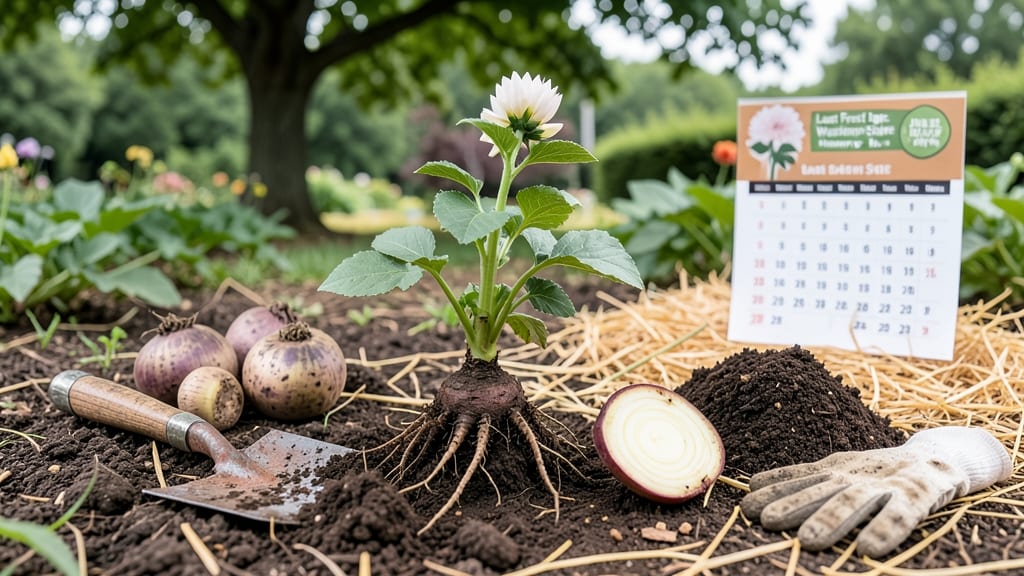
Timing your dahlia planting in Washington State can mean the difference between a showstopping garden and a season of disappointment. With frost dates that vary wildly—from mid-April in Seattle to late May in Spokane—getting it wrong risks losing those tender tubers before they even bloom.
You don’t just need to know the calendar; you need to understand your USDA zone and microclimate. A Puget Sound garden might be safe by early May, while inland areas like Yakima could still face late frosts.
The key is planting after the last frost and when soil temperatures hit that sweet spot for root growth.
In this guide, I’ll break down the exact frost-free windows for your zone, which dahlia varieties thrive in Washington’s climate, and how to prep tubers for success. Whether you’re a first-time gardener or a seasoned pro, these tips will help you maximize your blooms from July through fall.
Ready to turn your garden into a 🌼 paradise? Let’s dive into the best planting strategies tailored just for Washington State.
Washington State planting timeline by USDA zone: frost dates & safe times
Washington State spans USDA zones 6b through 9a, meaning your last frost dates can vary by over a month. In zone 6b (e.g., Spokane, Wenatchee), frost lingers until mid-May, while zone 9a (e.g., Yakima, Walla Walla) typically sees frost-free conditions by early April.
For Seattle (zone 8a), aim for mid-April to early May—the sweet spot between frost risk and summer heat.
Dahlia tubers are tender and frost-sensitive, so planting too early is a common mistake. Wait until soil temperatures reach 60°F (15°C)—use a soil thermometer if unsure.
In cooler zones (6-7), this often aligns with late May, while warmer inland areas (8-9) can plant as early as mid-April.
Here’s a region-specific breakdown to help you pinpoint your ideal window. Remember, microclimates matter: Urban areas like Seattle may warm faster than rural Cascade foothills, where frost can linger.
| USDA Zone | Example Cities | Avg. Last Frost | Safe Planting Window | Notes |
|---|---|---|---|---|
| 6b | Spokane, Wenatchee | Mid-May | Late May to early June | Plant early varieties or pre-sprout tubers indoors. |
| 7a-7b | Everett, Bellingham | Early May | Early to mid-May | Monitor microclimates—urban areas warm faster. |
| 8a | Seattle, Tacoma | Mid-April | Late April to early May | Use row covers for late frosts (common in May). |
| 8b-9a | Yakima, Walla Walla | Early April | Mid-April to late April | Plant heat-tolerant varieties to avoid bolting. |
For container gardening, you can plant 2-4 weeks earlier since pots warm faster. However, avoid planting in cold soil—even if frost is gone, chilly nights (below 50°F/10°C) can stunt growth. If you’re unsure, opt for slow-release fertilizer at planting to give roots a boost.
Pro tip: Mark your calendar for the average first frost date in your area (check the WA State University Extension for local data). Count backward 120 days—this gives you a target planting date for most dahlia varieties to bloom before frost.
In zone 9a, where summers are hot, plant early to mid-April to avoid heat stress during tuber establishment.
Conversely, in zone 6b, wait until after June 1 to ensure no late frosts sneak in. Pacific Northwest gardeners often swear by late May as a safe bet for most areas.
Don’t forget: Dahlias thrive on warmth, so even if frost is past, soil temperature is the real indicator. Use a soil thermometer ($10 at garden centers) to confirm readiness. Aim for consistent daytime temps above 65°F (18°C) for optimal growth.
If you’re in a transition zone (e.g., zone 7b near the Cascades), err on the side of planting later. A week’s delay can save your tubers from frost damage and ensure longer bloom times before fall.
For Seattle gardeners, consider pre-sprouting tubers indoors in late March. This gives you a 2-week head start and helps you time planting perfectly with the last frost window. Just avoid letting sprouts get too long—trim to 3-4 inches before planting.
Washington State planting timeline by USDA zone: frost dates & safe times
Washington State spans USDA zones 6b through 9a, meaning your last frost date can vary wildly—from mid-April in Seattle (Zone 8a) to mid-May in Spokane (Zone 7b). Dahlias, with their tender tubers, need soil temperatures of at least 60°F (15°C) to thrive, so timing is everything.
Plant too soon, and a late frost will kill your young shoots; too late, and you’ll miss peak blooms before fall’s first frost.
For Seattle and Western WA (Zones 7b-8a), aim to plant dahlia tubers 2-4 weeks after your average last frost date. This typically lands in mid-May to early June.
In Eastern WA (Zones 6b-7a), like Yakima or Wenatchee, wait until late May to early June—the later frost dates here demand patience. Always check your local USDA zone map or Almanac frost dates for precision.
| USDA Zone | Last Frost Date | Optimal Planting Window | Soil Temp Requirement |
|---|---|---|---|
| 6b (Spokane, Pullman) | Mid-May | Late May–Early June | 60°F (15°C) |
| 7a (Yakima, Wenatchee) | Early May | Late May–Mid-June | 60°F (15°C) |
| 7b (Bellingham, Mount Vernon) | Late April | Early May–Early June | 60°F (15°C) |
| 8a (Seattle, Portland) | Mid-April | Late April–Mid-May | 55°F (13°C) |
| 9a (Vancouver, Longview) | Early April | Mid-April–Early May | 50°F (10°C) |
Pro tip: Use a soil thermometer to confirm your garden beds have reached the 60°F (15°C) threshold before planting. In Zone 6b, where frosts linger, consider pre-sprouting tubers indoors 4-6 weeks before your target planting date to gain a head start.
This trick can shave critical weeks off your growing season.
For container gardening in cooler zones like Spokane or Wenatchee, plant tubers in pots and move them outdoors only after mid-June. Black plastic pots absorb heat and can warm soil faster, giving your dahlias a safer start. Just ensure pots have drainage holes to prevent rot.
Remember: First frost dates in Washington also vary—Seattle averages October 15, while Spokane sees frost by October 1. Plan to harvest or cut back dahlias 4-6 weeks before your expected first frost to protect tubers from cold damage.
In milder Zone 9a, you might even coax a second flush of blooms with late-season care!
🌱