
Plants
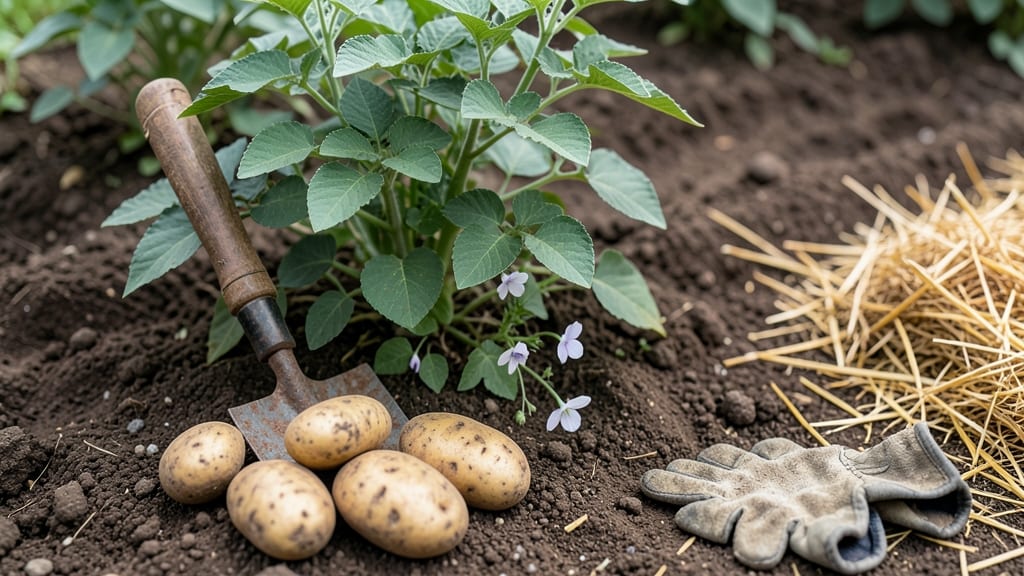
When to plant fall potatoes in Virginia can make or break your harvest—timing is everything. Too early, and your 🥔 plants bolt before frost; too late, and a sudden chill ruins everything. But with the right frost-date math, you can plant between mid-August and early September—giving your tubers 90-120 days to mature before winter sets in.
Here’s the key: Virginia’s USDA zones 7a-8a mean your first frost typically arrives around November 1, leaving you a tight window. Plant too soon, and your potatoes won’t reach harvest size before the cold hits.
Too late, and they won’t have enough time to establish strong roots and bulk up. The secret? Start planting 4-6 weeks before your expected frost date—that’s your ticket to zero-bolt, frost-free success.
In this guide, I’ll break down the exact planting timeline, the best potato varieties for Virginia’s climate, and pro tips to keep your crop thriving until harvest.
Whether you’re a seasoned gardener or just starting, these strategies will help you avoid common mistakes and maximize your yield—so you can enjoy homegrown potatoes straight from your garden.
Ready to turn your fall gardening into a foolproof harvest? Let’s dive into the details so you can plant with confidence and reap the rewards come October.
Virginia’s fall potato planting timeline: frost-date math explained
Timing your fall potato planting in Virginia comes down to two critical numbers: your first frost date and your chosen variety’s days to maturity. The goal? Plant 4-6 weeks before frost to ensure tubers mature before winter sets in.
For most of Virginia (USDA zones 5a-8a), this window falls between mid-August and early September, but exact dates vary by location.
Let’s break it down: If your area’s average first frost is November 1, and you’re growing a 90-day variety, you’d plant by August 2 to harvest before frost.
Use your local USDA zone map and historical frost data to fine-tune your schedule—Virginia’s coastal regions (like Norfolk) often have later frosts than the mountains (like Roanoke).
Pro tip: Check soil temperatures too! Potatoes thrive when soil stays above 45°F (7°C). If nights dip below this, delay planting until temperatures stabilize. A soil thermometer is your best friend here—warm soil = faster sprouting.
🌱
Virginia Fall Potato Planting Timeline
| USDA Zone | First Frost (Avg.) | Planting Window | Ideal Variety Maturity | Harvest Window |
|---|---|---|---|---|
| 5a (Mountains) | October 15 | July 20 - August 10 | 70-90 days | Late Sept - Early Oct |
| 6a (Piedmont) | October 30 | August 1 - August 25 | 90-110 days | Late Oct - Early Nov |
| 7a (Coastal) | November 15 | August 15 - Sept 5 | 100-120 days | Mid-Nov - Early Dec |
| 8a (Tidewater) | November 30 | August 25 - Sept 15 | 110-130 days | Late Nov - Dec 15 |
*Adjust for early/late frosts using Almanac frost calculators.
Why this timeline works: Potatoes need 90-120 days to mature in Virginia’s fall conditions. Planting too early (like June or July) risks bolting—when plants flower prematurely and produce small, bitter tubers. Planting too late (after September) leaves tubers vulnerable to frost damage before harvest.
For a risk-free harvest, aim to plant when daytime temps hover around 70°F (21°C) and nights stay above 50°F (10°C). This balance gives your potatoes enough warmth to sprout but avoids the heat stress that triggers bolting. In Virginia, this typically aligns with late August for most regions.
Don’t forget to account for soil prep time too! Potatoes love loose, well-draining soil rich in organic matter. If your garden bed is compacted or nutrient-poor, add compost or aged manure 2-3 weeks before planting to give the soil time to settle.
A quick soil test (pH 5.0-6.5 is ideal) can save you from wasted effort.
Here’s a quick cheat sheet: If you’re in Northern Virginia (zone 7a), plant Yukon Gold (100 days) by August 15 for a mid-October harvest. In Southwest Virginia (zone 6a), opt for Kennebec (90 days) and plant by August 1.
Always check your variety’s seed packet for exact days-to-maturity—this is your planting deadline countdown!
🌿
One common mistake? Ignoring microclimates in Virginia. A south-facing bed warms up faster than a north-facing one, so you might plant 1-2 weeks earlier in sunny spots.
Similarly, elevated areas (like hills) frost earlier than valleys. Use a frost calendar specific to your town—resources like the Virginia Cooperative Extension provide localized data.
Finally, mark
Virginia’s fall potato planting timeline: frost-date math explained
Timing is everything when planting fall potatoes in Virginia. The key is planting 4-6 weeks before your average first frost date—typically mid-August to early September for most of the state. This window ensures tubers mature before frost hits, but not so early that they bolt prematurely.
For example, in USDA Zone 7a (like Roanoke), aim for August 15-25, while Zone 8a (Richmond) can wait until September 1-10.
Potatoes need 90-120 days to mature from planting, so calculate backward from your first frost date. Use the USDA Plant Hardiness Zone Map to find your exact zone, then subtract 120 days from the first frost date.
For instance, if your first frost is November 1, plant by July 2—but this is too early for fall potatoes, which is why we focus on late summer planting.
Here’s the critical frost-date math: Virginia’s average first frost ranges from October 20 (Zone 5a) to November 15 (Zone 8a). Subtract 120 days (maturity window) to find your planting date.
For Zone 7a, that’s mid-August; for Zone 8a, it’s early September. Planting outside this window risks either bolting (too early) or frost damage (too late).
Soil temperature is just as critical as frost dates. Potatoes thrive in soil temps between 50°F and 75°F. In Virginia, soil temps drop below 50°F by mid-October, so planting after early September risks stunted growth.
Use a soil thermometer to confirm temps are above 50°F before planting. Warmer soil speeds germination, while cooler soil delays sprouting—critical for fall planting.
Pro tip: If your soil is too warm (>80°F) in late summer, wait a week or two. Hot soil can cause seed potatoes to rot before sprouting. Conversely, if temps drop below 50°F too soon, consider using black plastic mulch to retain heat and extend the growing season.
This is especially useful in higher elevations (Zone 5a-6a), where nights cool faster.
Finally, don’t forget to account for potato variety maturity. Faster-maturing varieties (like ‘Yukon Gold’ at 90 days) can be planted slightly later than slower varieties (like ‘Russet’ at 120 days).
Adjust your planting window by 1-2 weeks earlier for slower varieties to ensure they reach maturity before frost. Always check the seed packet for days-to-maturity guidelines.