
Flowers
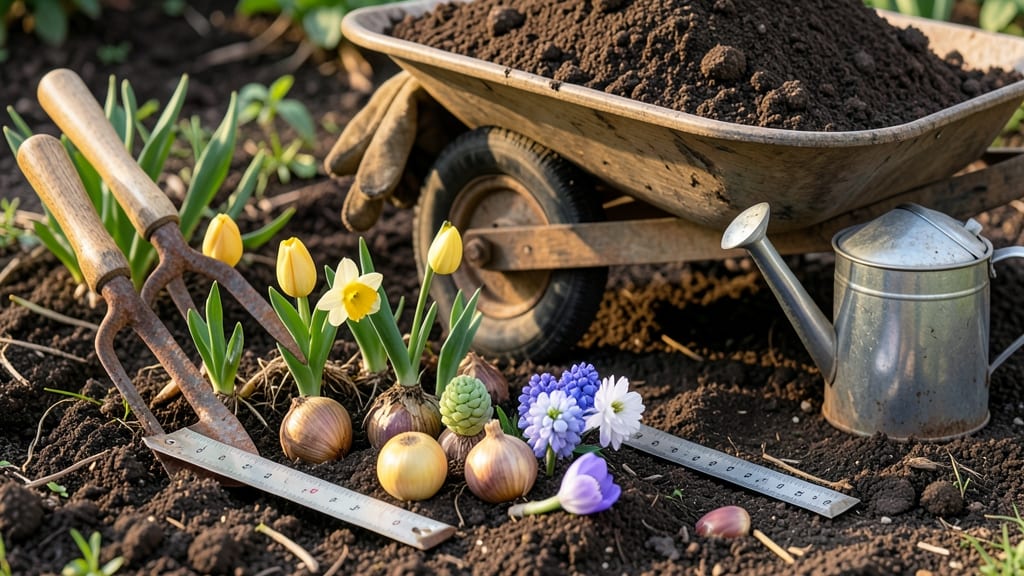
Timing your spring planting of flower bulbs 🌷 can mean the difference between a vibrant garden and a missed opportunity.
If you wait until the last frost has passed but the soil is still cold, your bulbs might struggle to root properly, leaving you with sparse blooms—or worse, no flowers at all.
Most gardeners in USDA Zone 6a (like me!) know that planting too early risks frost damage, while waiting too late cuts into the growing season.
The key is finding that sweet spot when soil temperatures hit 50°F and stay there for at least a week—usually 2-4 weeks after your last frost date.
In this guide, I’ll break down the exact planting window for your region, including how to adjust for early or late springs. You’ll also discover which bulbs thrive in cooler soil, how deep to plant them, and when to fertilize for the most dramatic blooms.
Whether you’re a seasoned gardener or just starting, these tips will help you avoid common mistakes and get your flower bulbs off to the best possible start. Let’s get those roots growing!
Spring planting timeline by USDA Zone: exact frost-date calculator
Planting flower bulbs in spring requires precision—miss the window, and your tulips or daffodils may never bloom. The key is aligning your planting with your USDA zone and last frost date.
In Zone 3, early bloomers like crocuses can go in as soon as soil thaws, while Zone 10 gardeners might plant until May. Always check your local frost-free date to avoid cold damage.
Most spring-planted bulbs need 6-8 weeks of cool soil to establish roots before shoots emerge. If you live in a region with unpredictable frost, opt for hardy varieties like daffodils or alliums, which tolerate cooler soils better than tulips.
Coastal areas often have later frost dates than inland zones—adjust accordingly.
Here’s your zone-by-zone planting guide, including soil temperature thresholds and regional adjustments:
For Zone 6a (like my garden!), aim to plant tulip bulbs in early April when soil temps hit 45°F (7°C). Use a soil thermometer to confirm—cold soil slows root growth.
If you’re in a coastal zone, like Zone 9, you might start as early as January, but avoid planting if frost warnings linger.
Pro tip: Pre-chill bulbs for 4-6 weeks in the fridge if your spring is unusually warm. This mimics winter dormancy and ensures bloom synchronization. Store bulbs in a paper bag with peat moss to maintain humidity.
If you’re unsure about your last frost date, check the National Weather Service or use the Almanac’s Frost Calculator. In my experience, Zone 5 gardeners often plant 2 weeks later than the official date to account for unpredictable cold snaps.
Always err on the side of caution—healthy roots mean better blooms!
After planting, mulch with straw to insulate bulbs from temperature swings. This is especially critical in Zone 4, where late frosts can delay shoots by 3-4 weeks. Water lightly until shoots emerge, then increase to 1 inch per week once growth starts.
Remember: Spring-planted bulbs often bloom 1-2 weeks later than fall-planted ones. If you’re craving early color, combine spring bulbs with fall-planted varieties for a sequential bloom display. For example, plant crocuses in spring for March blooms, then add tulips in fall for April/May color.
🌷
How to adjust planting for early vs. late spring frost risks
Spring frost can be unpredictable, and planting flower bulbs too early or late risks losing your investment. In USDA Zones 3-5, late frosts after March 15 are common, while Zones 7-10 may face early frosts as late as November.
Adjust your planting timeline based on your local last frost date—not just the calendar.
For gardeners in unpredictable climates, like the Pacific Northwest or Midwest, use a soil thermometer to confirm when soil temps reach 50°F (10°C)—the ideal temperature for most bulbs. This often happens 2-4 weeks after your official last frost date, especially in cooler microclimates like valleys or shaded areas.
Frost Risk Adjustments for Spring Planting
- Early Spring Frost Risk: Use mulch (3-4 inches) or cold frames to protect bulbs in Zones 3-6 planted before April 15.
- Late Spring Frost Risk: Choose daffodils or crocuses—they tolerate 32°F (0°C) better than tulips.
- Soil Temp Check: Wait until soil is 50°F+ (10°C+), even if air temps warm up.
- Coastal Areas: Plant 2 weeks later than inland zones due to delayed warming.
If your spring brings unexpected late frosts, prioritize hardy bulbs like alliums or fritillarias, which can handle 28°F (-2°C). For tulips and hyacinths, delay planting until after May 1 in Zones 4-6 if frost is still a threat. A row cover or cloche can buy you an extra 2-3 weeks of planting time.
Protecting newly planted bulbs with straw mulch or landscape fabric adds a 5-10°F buffer against frost. This is especially critical for shallow-rooted bulbs like snowdrops or grape hyacinths, which can be damaged by even light freezes.
In Zones 7-10, where early frosts are rare, focus on soil prep—amend with compost to improve drainage and reduce frost heave.
For container gardeners, move pots to a sheltered porch or garage at night if frost is forecasted within 72 hours of planting. Bulbs in containers warm up faster than in-ground plantings, making them 20% more frost-sensitive.
Always plant containers in well-draining mixes with perlite or vermiculite to prevent waterlogged roots from freezing.
Monitor your local National Weather Service alerts for "growing degree days"—a measure of heat accumulation. Most bulbs need 100-150 growing degree days before emerging. Use this metric to fine-tune your planting date beyond just frost dates.
For example, in Zone 5, aim for April 20-May 1 when growing degree days reach 120+.