
Flowers
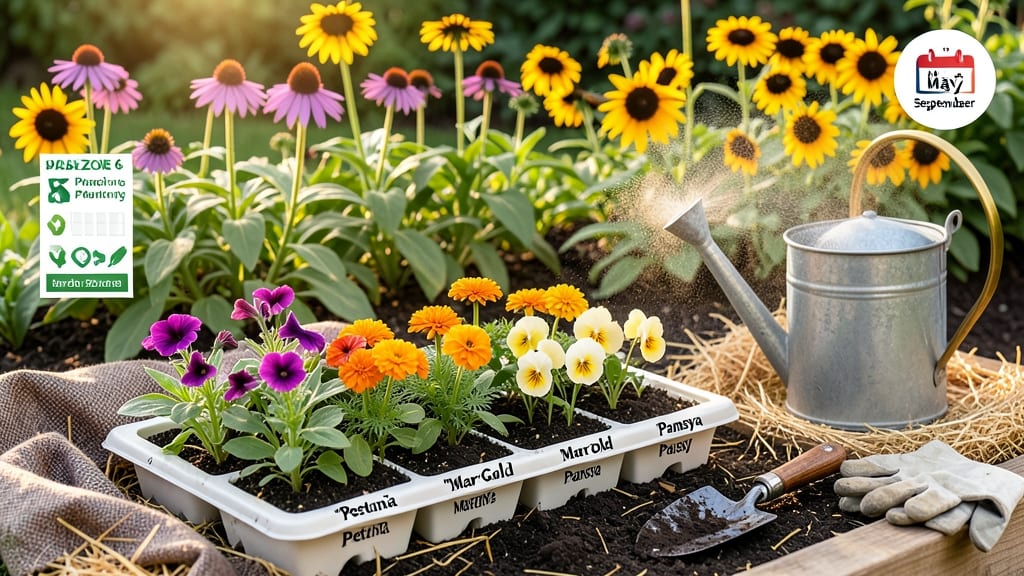
Timing your flower planting in Zone 6 is the secret weapon for a garden packed with vibrant blooms year after year.
Whether you're dreaming of spring tulips or summer dahlias, getting those seeds in the ground at the right moment makes all the difference between a thriving landscape and a season of disappointment.
With Zone 6's 6a-6b climate, you've got two key planting windows: spring (after that last frost around April 15) and fall (6-8 weeks before the first frost).
But here's the catch - not all flowers play by the same rules. Annuals like petunias need warm soil to germinate, while cool-season pansies can handle early spring chills.
Let me show you exactly when to plant each type of flower for maximum blooms, plus how to adjust for your specific corner of Zone 6.
We'll cover everything from bulbs that need fall planting to perennials that can handle early spring conditions - so you'll know exactly when to grab those trowels and get growing.
Ready to transform your garden into a year-round floral paradise? The timing is everything, and I've got the precise schedule you need to make it happen without a single frost-related setback.
Zone 6 last-frost dates by flower type: when to plant for maximum blooms
In Zone 6, understanding your last-frost dates is critical—most areas experience their final frost between April 15 and May 15, but timing varies by elevation and microclimates.
For example, Northern Zone 6 (like Chicago) may see frost until May 10, while Southern Zone 6 (like Nashville) often warms up by April 20. Always check local frost prediction tools like the National Weather Service or Almanac for your exact date.
Your planting window opens once soil temperatures reach 60°F, typically 2-4 weeks after the last frost.
Cool-season flowers like pansies and snapdragons can handle light frosts, but tender varieties such as geraniums and impatiens need to wait until May 20-June 1 to avoid damage. Bulbs like tulips and daffodils, however, should be planted in fall (September-October) for spring blooms.
Here’s a quick guide to planting times by flower type, based on Zone 6 averages:
| Flower Type | Planting Window | Notes |
|---|---|---|
| Cool-Season Annuals (e.g., pansies, violas) | Early Spring (March 15–April 15) or Fall (August 15–September 15) | Tolerate light frost; ideal for spring/fall color. |
| Warm-Season Annuals (e.g., marigolds, petunias) | After last frost (May 1–June 1) | Need soil temps above 60°F; use row covers if early planting. |
| Perennials (e.g., daylilies, coneflowers) | Early Spring (April 15–May 15) or Fall (September 1–October 1) | Establish roots before summer heat; fall planting prevents drought stress. |
| Spring-Blooming Bulbs (e.g., tulips, daffodils) | Fall (September 15–October 15) | Plant 6–8 weeks before ground freezes for spring blooms. |
| Fall-Blooming Bulbs (e.g., chrysanthemums, asters) | Early Spring (March 1–April 15) | Bloom in late summer/fall; plant early for strong root growth. |
For tender perennials like canna lilies or dahlias, wait until May 20–June 1 to plant, as they’re sensitive to even light frosts.
If you’re eager to start early, use row covers or cold frames to protect seedlings until the risk of frost passes. Succession planting is also key for annuals: sow marigolds or zinnias every 2 weeks from May to July to ensure continuous blooms all summer.
In Zone 6b (warmer sub-zone), you might push warm-season flowers like begonias or coleus into the ground by April 25, but always verify soil temps with a soil thermometer. Northern Zone 6a gardeners should err on the side of caution and wait until May 10 for heat-loving varieties.
Pro tip: Plant heat-tolerant flowers like lantana or salvia in late May for a summer-long show.
Don’t forget about fall planting! Many cool-season flowers thrive when sown in late summer (August–September), giving you early spring blooms. Examples include snapdragons, sweet alyssum, and stock, which can handle light frosts and even overwinter in Zone 6 with mulch protection.
This strategy also reduces spring competition for space and resources.
To track your local frost dates, bookmark the Old Farmer’s Almanac or use apps like PlantNet, which provide hyperlocal frost predictions. I’ve found that planting pansies in early September often results in blooms by October, adding color to fall gardens when many other plants are winding down.
The key is adjusting your timeline based on microclimates—a south-facing slope warms up faster than a shady corner, so plant heat-lovers there first.
Finally, test your soil temperature before planting. Use a soil thermometer to confirm it’s 60°F or warmer for warm-season flowers. If it’s cooler, wait 1–2 weeks—rushing can stunt growth or invite fungal diseases. Patience pays off with healthier, more
How to adjust planting times for early, mid-season, and late-blooming flowers in Zone 6
Zone 6 gardeners can stretch their bloom season by strategically timing plantings for early, mid-season, and late flowers. The key is understanding each flower's cold tolerance and maturity timeline. For example, pansies and snapdragons can handle light frosts, while dahlias and cosmos need warmer soil to thrive.
Start with cool-season flowers like calendula and lobelia in early spring (March) when soil temps reach 40-50°F. These hardy annuals tolerate brief cold snaps and bloom quickly, giving you color before summer heat arrives.
Meanwhile, fall-planted bulbs like tulips and daffodils should go in the ground 6-8 weeks before first frost (typically late September).
For mid-season bloomers, aim for late April to early May plantings once the last frost date has passed. This timing works for petunias, marigolds, and zinnias, which need consistent warmth to establish roots before summer's intensity.
Use row covers if nighttime temps dip below 50°F to protect tender seedlings.
🌱 3 Key Strategies to Extend Your Bloom Season
- Succession Planting: Sow fast-growing annuals like bachelor's buttons every 2-3 weeks from May to July for continuous blooms.
- Fall Planting: Choose cold-hardy perennials like asters and chrysanthemums for late-season color (plant in August-September).
- Microclimates: Use south-facing walls or greenhouses to plant tender flowers like geraniums 2-3 weeks earlier.
Don't overlook late-season bloomers like goldenrod and sedum, which thrive in cooler fall temps. These perennials often bloom September-October and add structure to your garden as summer fades. For annuals, try stocks and pansies in late summer (August) for winter interest if your zone doesn't experience harsh freezes.
Always check seed packets for days to maturity—this tells you how long a plant needs to bloom from seeding. For example, cosmos mature in 60-70 days, while sunflowers take 80-100 days. Plant faster varieties first, then follow with longer-season bloomers to create a sequential display.
Pro tip: Use a garden journal to track planting dates and bloom times. Over 2-3 years, you'll learn which flowers thrive in your specific microclimate and adjust timing accordingly.
For instance, if your south-facing bed warms up faster, you might plant heat-loving flowers like lantana a week earlier than the general guideline.