
Plants
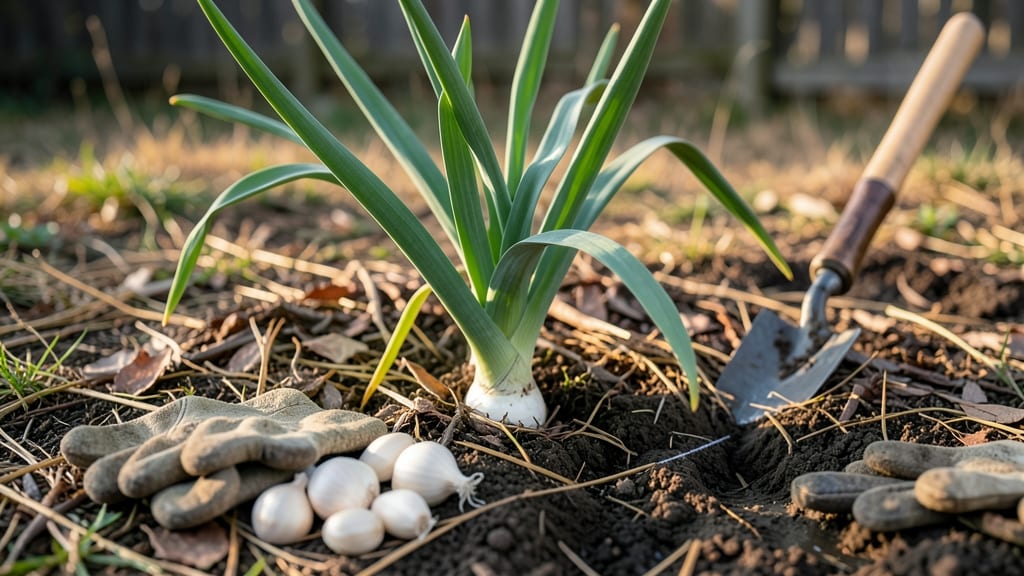
Planting garlic in North Dakota isn’t just about timing—it’s about survival in Zone 4a winters where a single misstep can mean the difference between a bumper crop and wasted cloves. If you’ve ever watched your garlic bolts prematurely or freeze before establishing roots, you know the stakes are high.
The secret lies in planting 🧄 between mid-September and early October, when soil temperatures drop but haven’t yet frozen solid. This narrow window ensures your garlic gets the 60-90 days of cold stratification it needs to develop hardy bulbs before North Dakota’s harsh freeze sets in.
Skip this step, and you’ll either end up with weak plants or none at all.
But here’s the kicker: not all fall planting dates work equally well. Soil conditions, snow cover, and even your specific microclimate (whether you’re in Fargo, Bismarck, or the western plains) can shift the ideal window by 1-2 weeks.
I’ll break down exactly how to read your local frost patterns and adjust your schedule for foolproof results.
Ready to turn your North Dakota garden into a garlic powerhouse? Let’s dive into the exact steps to plant garlic at the perfect moment—so you’re harvesting plump, flavorful bulbs by late July instead of watching your crop fail before it starts.
Optimal fall planting windows for North Dakota garlic success
In North Dakota’s Zone 3-4 climate, timing your garlic planting is everything. The ideal window falls between mid-September and early October, when soil temperatures drop to 50-60°F—perfect for root establishment before winter.
This schedule ensures your hardneck varieties get the 4-6 weeks of cold stratification they need to develop robust bulbs next summer.
Miss this window, and you risk either premature bolting (if planted too early) or inadequate cold exposure (if planted too late).
For Fargo and eastern ND, aim for September 15-October 5, while western areas like Dickinson can push planting to early November due to colder, drier conditions that delay soil freeze.
🌱
| Region | Optimal Planting Window | Soil Temp Threshold | Key Consideration |
|---|---|---|---|
| Fargo & Eastern ND | Mid-September to October 5 | 50-60°F | Humid climate; avoid late planting |
| Bismarck & Central ND | Late September to October 15 | 45-55°F | Moderate snow cover; extend window |
| Western ND (Dickinson) | Early October to November 1 | 40-50°F | Dry climate; soil freezes faster |
| All Regions | 4-6 weeks before ground freeze | N/A | Use moon phases for best results |
For moon phase enthusiasts, planting during the waning moon (after the full moon) encourages stronger root development. In 2024, this aligns with September 29-October 13—perfect for North Dakota’s ideal window. Use a gardening almanac to cross-reference lunar cycles with your local frost dates.
Another pro tip: Test your soil temperature with a soil thermometer before planting. If temps drop below 40°F, delay until conditions stabilize. Hardneck varieties like 'Music' or 'German White' thrive with this approach, yielding larger bulbs by harvest season.
If you’re in doubt about your last frost date, check the ND State Climate Office or local NDSU Extension Service for updates. Their historical frost data can help you adjust your schedule year-to-year.
For example, Fargo’s average last frost is October 15, so planting by September 20 gives you a 4-week buffer.
🌿
One common mistake is assuming November planting works in all areas. While western ND may accommodate it, eastern regions risk soil freeze before roots establish. Instead, prioritize well-draining soil and mulch heavily (with straw or leaves) to insulate cloves during winter.
For container gardening in North Dakota, plant garlic in deep pots (12+ inches) and move them to a garage or unheated shed during extreme cold snaps (below 0°F). This extends your planting window into early November while protecting your investment.
Finally, remember that garlic planted in spring (March-April) yields smaller bulbs with higher bolting risk. Fall planting is non-negotiable for Zone 3-4 success, so mark your calendar now and prepare your soil with compost and balanced fertilizer for next month’s planting.
Key factors that determine your perfect planting date
Timing your garlic planting in North Dakota isn’t just about picking a month—it’s about understanding soil temperatures, frost dates, and garlic variety maturity. The USDA hardiness zone map tells you where to grow, but these key factors tell you when.
For Zone 3-4, we’re talking about 4-6 weeks before hard freeze, usually mid-September to early October.
First, check your local frost dates. North Dakota’s average first hard freeze ranges from October 15 in Fargo to October 20 in western areas. Planting too close to this date risks poor root establishment before winter dormancy.
Use the NDAWN weather station network for hyper-local data—it’s a game-changer for fine-tuning your schedule.
Next, consider soil freeze depth. In Bismarck, soils typically freeze to 12-18 inches deep by late November. Garlic cloves need 4-6 inches of soil cover to survive, but deeper freezes can stress plants.
If your soil freezes deeper than 12 inches, opt for earlier planting (late August) or use mulch (straw or leaves) for insulation.
Don’t overlook moon phases, either. Planting during the waxing moon (just after the new moon) encourages root development, which is critical for garlic’s winter survival. Check a lunar planting calendar—it’s especially useful in ND’s short growing season.
Finally, test your soil pH. North Dakota’s clay-heavy soils often test alkaline (pH 7.5+), but garlic thrives in pH 6.0-7.0. Amend with sulfur or peat moss if needed. A soil test from NDSU Extension costs just $15 and saves headaches later.
Pro tip: Mark your calendar for October 1—it’s the absolute deadline for most of North Dakota.
After that, your garlic won’t have enough time to establish roots before winter sets in. Miss this window, and you’ll likely end up with small, weak bulbs—or no harvest at all. 🌱