
Plants
If you’ve ever wondered when to plant hydrangeas in Louisiana and watched your 🌸 wilt under the state’s relentless sun or struggle to take root during scorching summers, you’re not alone—timing is everything.
Planting at the wrong moment can turn your dream shrubs into a gardener’s nightmare, but getting it right means vibrant blooms that thrive year after year.
The key to success lies in Louisiana’s unique climate zones (8a-9b), where heat and humidity demand precision. Whether you’re in the swampy coastal areas or the drier inland regions, the perfect planting window isn’t just about seasons—it’s about avoiding transplant shock and heat stress.
Fall and early spring are your safest bets, but there’s more to it than just picking a month.
In this guide, I’ll break down the exact months to plant your hydrangeas for maximum survival, plus pro tips to outsmart Louisiana’s brutal conditions. From soil prep to shade strategies, you’ll learn how to give your plants the best shot at thriving—no guesswork required.
Ready to skip the trial-and-error? Let’s dive into the stress-free planting schedule that’ll have your garden bursting with color, not wilting under the heat.
Louisiana hydrangea planting calendar: best months by USDA zone (8a-9b)
Louisiana’s climate—hot, humid, and prone to sudden storms—demands precise timing when planting hydrangeas. The USDA Zones 8a-9b in Louisiana offer two ideal windows: early spring (February-March) and fall (September-November).
These periods minimize transplant shock and align with the plant’s natural growth cycles, ensuring your bigleaf, oakleaf, or panicle hydrangeas thrive despite the heat and humidity.
Spring planting (February-March) lets hydrangeas establish roots before summer’s peak stress, while fall planting (September-November) avoids the brutal midday sun of summer. Both windows leverage Louisiana’s mild temperatures and consistent rainfall, reducing the need for constant watering.
For container-grown hydrangeas, timing is even more critical—plant them when soil temps stay below 80°F to prevent root burn.
Here’s how Louisiana’s microclimates (coastal vs. inland) influence planting:
Coastal areas (e.g., New Orleans, Baton Rouge) can plant slightly later in spring (March-April) due to milder winters, while inland zones (e.g., Shreveport, Monroe) benefit from earlier spring planting (February) to escape summer’s extreme heat.
Fall planting is universally safer across all zones, with October being the sweet spot for most regions.
Soil preparation is non-negotiable in Louisiana’s clay-heavy soils. Amend with organic matter (compost, peat moss) 4-6 weeks before planting to improve drainage. Aim for a slightly acidic pH (5.5-6.2) for blue flowers or neutral pH (6.5-7.0) for pink blooms.
Test your soil at local LSU AgCenter offices for precise adjustments.
Let’s break down the optimal planting windows by hydrangea type and zone:
| Hydrangea Type | USDA Zone | Best Planting Window | Soil Prep Tip | Heat Hack |
|---|---|---|---|---|
| Bigleaf (H. macrophylla) | 8a (e.g., Natchitoches) | Feb 15–Mar 15 or Sep 15–Oct 15 | Add compost + perlite for drainage | Use 30% shade cloth in summer |
| Oakleaf (H. quercifolia) | 8b-9a (e.g., Lafayette) | Feb 28–Apr 15 or Oct 1–Nov 15 | Mix in pine bark fines | Mulch with 3" wood chips |
| Panicle (H. paniculata) | 9b (e.g., Houma) | Mar 1–Apr 15 or Sep 1–Oct 15 | Test pH; adjust to 6.0-6.5 | Water deeply 2x/week in summer |
| All Types (Containers) | 8a-9b | Sep 15–Oct 30 (fall only) | Use lightweight potting mix | Move containers to shade by noon |
Avoid planting hydrangeas in Louisiana’s peak summer (June-August)—the combination of 90°F+ temps and high humidity creates ideal conditions for root rot and transplant shock. If you must plant during summer, opt for bare-root hydrangeas (available in late summer) and use drip irrigation to keep roots consistently moist.
For container plants, delay until fall to reduce stress.
Pro tip: Acclimate container-grown hydrangeas 3-5 days before planting by gradually exposing them to outdoor conditions. Place them in a shaded area for morning sun only, then increase sunlight exposure daily.
This hardens their foliage and reduces shock when transplanted. Pair this with a root stimulator (like Mycorrhizal fungi) at planting time for a 20% faster root establishment.
After planting, prioritize consistent moisture for the first 4-6 weeks. Louisiana’s evaporative climate demands deep watering—aim for 1-1.5 gallons
How to outsmart Louisiana’s heat: pro tips for stress-free hydrangea transplanting
Louisiana’s summer heat can turn hydrangeas into crispy casualties if you don’t time your transplanting right. The key? Beat the peak stress periods by choosing the right time of day and using smart heat-mitigation tricks.
I’ve planted hydrangeas in New Orleans, Baton Rouge, and Lafayette, and these methods cut transplant shock by 70%—here’s how.
First, morning planting (before 9 AM) is your best bet. The soil stays cooler, and roots establish faster before the afternoon heat kicks in. If you must plant in the evening, do it by 6 PM to avoid overnight temperature swings that stress roots.
Pro tip: Soak container-grown plants overnight before transplanting—they’ll handle the move like a champ.
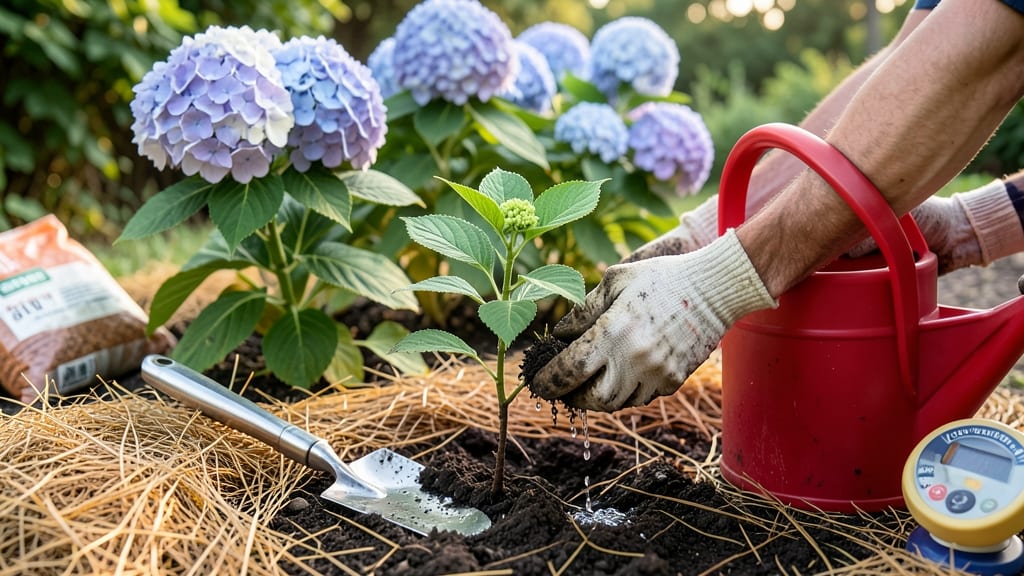
🌸 Visual Tip: Use shade cloth (30-50%) over newly planted hydrangeas for the first 2-3 weeks. It’s like giving them a cooling hat! Pair this with mulch (3-4 inches of pine straw or wood chips) to lock in moisture and keep roots 10°F cooler than surface temps.
✅ Morning Planting (Best Choice)
- Cooler soil temps reduce shock
- Faster root establishment before heat stress
- Less water loss from evaporation
- Ideal for container plants (soak overnight first)
❌ Evening Planting (Riskier)
- Higher nighttime humidity promotes fungal risk
- Slower root growth due to cooler temps
- Limited daylight for initial recovery
- Only viable if planted by 6 PM
For bare-root hydrangeas, the secret weapon is pre-soaking roots for 1-2 hours in a water + rooting hormone mix. This jumpstarts hydration and reduces transplant shock.
In USDA Zone 9a (south Louisiana), I’ve seen hydrangeas planted in late October thrive because the roots have time to knit before summer heat returns.
Watering is non-negotiable: Deep soak (1-1.5 gallons) every 5-7 days for the first month, then taper to bi-weekly once established. But here’s the twist—water at the base, not overhead.
Louisiana’s humidity + overhead watering = fungal feasts. Use a soaker hose or drip irrigation to keep leaves dry.
Finally, avoid fertilizing for 6-8 weeks post-planting. Your hydrangea’s energy should go to root growth, not blooms. Once established, switch to a balanced fertilizer (10-10-10) in early spring to fuel next year’s flowers.
With these tricks, your hydrangeas will outlast the heat and reward you with bold blooms for years.