
Plants
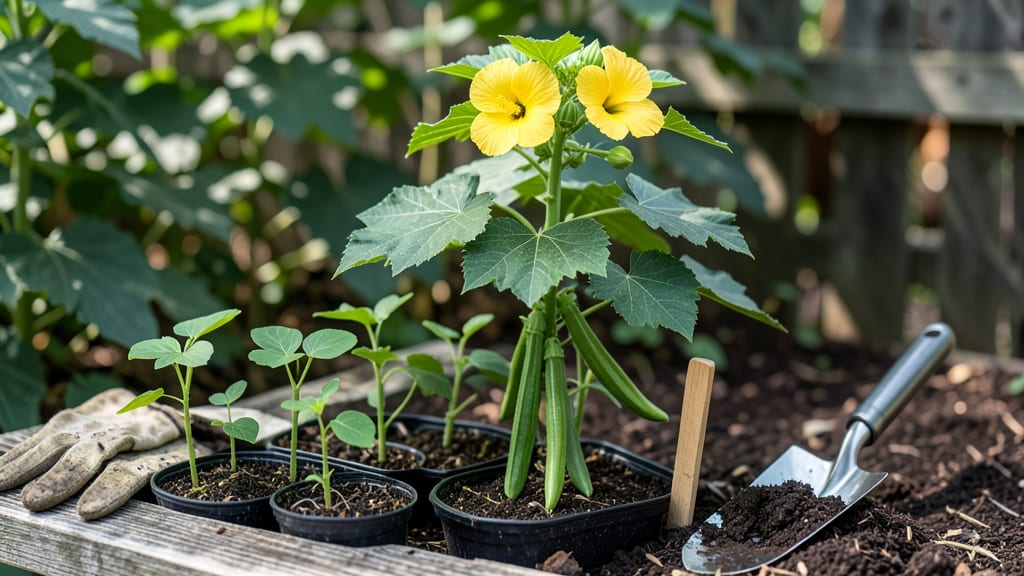
If you're dreaming of a bountiful okra harvest in North Carolina, timing your planting is the game-changer between success and disappointment. The perfect window for planting okra in North Carolina runs from April 15 to June 15, but getting it wrong can mean stunted plants or missed harvests entirely.
Why does this matter? Okra thrives in heat—ideal soil temperatures of 85°F+—and planting too early in cooler zones like the Piedmont risks frost damage. Meanwhile, coastal areas can start sooner, thanks to their milder winters.
I’ll break down exactly when to plant in your specific county, so you can align your okra 🌱 with North Carolina’s unique microclimates.
You’ll also discover how to adjust for early vs. late varieties, avoid common mistakes, and extend your harvest through succession planting. Whether you're a beginner or a seasoned gardener, these tips will help you grow okra that’s taller, healthier, and ready to harvest from July to October.
Ready to turn your garden into a okra powerhouse? Let’s dive into the frost-free window that works best for your corner of North Carolina—and set you up for a harvest that’ll last all summer long.
North Carolina okra planting dates by last frost zone (with county-specific maps)
Okra thrives in North Carolina’s heat, but timing your planting is critical to avoid frost damage or stunted growth. The state’s last frost dates vary dramatically—from late March in the coastal plain to early May in the mountains.
For optimal growth, wait until soil temperatures hit 60°F (15°C) and nighttime temps stay above 50°F (10°C).
Most NC gardeners plant okra between April 15 and June 15, but your exact window depends on your USDA zone (7a-8b) and microclimate. Coastal areas like Wilmington can start as early as March 20, while higher elevations like Asheville may need to wait until May 15.
Always check your county’s last frost average for precision.
| Region | Last Frost Date | Optimal Planting Window | Notes |
|---|---|---|---|
| Coastal Plain (e.g., Wilmington, Fayetteville) | March 20–April 5 | March 25–April 15 | Warm soils early; use black plastic mulch |
| Piedmont (e.g., Raleigh, Greensboro) | April 1–April 15 | April 15–May 1 | Soil warms slower; test temps |
| Mountains (e.g., Asheville, Boone) | May 1–May 15 | May 15–June 1 | Short season; choose fast varieties |
For direct planting (most common for okra), sow seeds ½ inch deep and 1 inch apart in rows spaced 2–3 feet apart. If transplanting seedlings, wait until they’re 3–4 inches tall and harden off for 5–7 days before setting them out.
Seedlings are frost-sensitive, so never rush the process—even a light frost can kill them.
In coastal NC, where humidity is high, opt for spaced-out plantings every 2–3 weeks from April to June to extend your harvest. This works especially well for ‘Clemson Spineless’, a heat-tolerant favorite.
Meanwhile, mountain gardeners should focus on early-maturing varieties like ‘Emerald Green Bush’ to beat the first frost in October.
Use a soil thermometer to confirm readiness—okra seeds won’t germinate below 60°F (15°C). If your soil is cooler, try black plastic mulch or a cold frame to warm it faster. Pro tip: Plant near sunflowers or corn to attract pollinators and deter pests like aphids.
North Carolina’s frost-free growing season averages 210 days, but okra needs 60–75 days to mature. Plan accordingly: In the Piedmont, aim for a July harvest, while coastal gardeners can enjoy pods into October. Always mark your last frost date on a calendar—it’s your planting deadline.
For real-time updates, check the NC State Extension’s frost maps or use the Old Farmer’s Almanac for your county. Local nurseries often provide hyper-local advice, too. Don’t forget: Okra is a warm-season crop, so patience pays off—rushing leads to poor germination or bolted plants.
If you’re in a transition zone (like the Sandhills), err on the side of late planting (May 1) to avoid unexpected cold snaps. And remember: Okra’s pods form faster in heat, so the earlier you plant in your zone, the sooner you’ll harvest. Balance is key!
🌱
How to adjust okra planting time for early vs. late varieties in NC’s climate
North Carolina’s diverse climate—from the warm coastal plains to the cooler mountain regions—means you’ll need to adjust your okra planting timing based on variety and microclimate. Early varieties like ‘Emerald Green Bush’ thrive in shorter seasons, while heat-tolerant types like ‘Clemson Spineless’ can handle NC’s peak summer heat.
Your goal? Match the variety to your last frost date and soil warmth.
For coastal NC (zones 8a-8b), where soil warms quickly, you can plant early varieties as soon as April 1—sometimes even late March in sheltered spots. In the Piedmont (7a-7b), wait until mid-April to early May when soil hits 60°F+.
Mountain regions (6b-7a) should delay until late May to avoid frost damage.
Here’s how to choose the right variety for your NC zone and extend your harvest with succession planting:
| Variety | Days to Maturity | Best NC Zone | Planting Window | Succession Tip |
|---|---|---|---|---|
| ‘Emerald Green Bush’ | 55-60 days | Coastal (8a-8b) | March 30 - April 15 | Plant every 2 weeks for staggered harvests |
| ‘Clemson Spineless’ | 60-65 days | Piedmont (7a-7b) | April 15 - May 10 | Add mulch to retain soil heat for late plantings |
| ‘Star of David’ | 65-70 days | Mountains (6b-7a) | May 15 - June 1 | Use black plastic mulch to warm soil faster |
Pro tip: Use a soil thermometer to confirm readiness—okra seeds won’t sprout below 60°F. In sandy coastal soils, add compost to help retain moisture and warmth. For mountain gardens, consider row covers to extend the season by 2-3 weeks.
If you’re in Zone 7a (Piedmont), plant your first batch around April 15 and a second batch May 15 for a continuous harvest. In Zone 8b (coastal), you might even squeeze in two full harvests by planting in March and June.
Just remember: okra hates cold soil, so never rush it!
For late-season varieties, like ‘Jinhee,’ push plantings to June 1 in the Piedmont or June 15 in the mountains. These heat-lovers produce pods even as summer fades, giving you a second harvest wave in September. Just monitor for pests like aphids during this extended window.
🌱