
How To
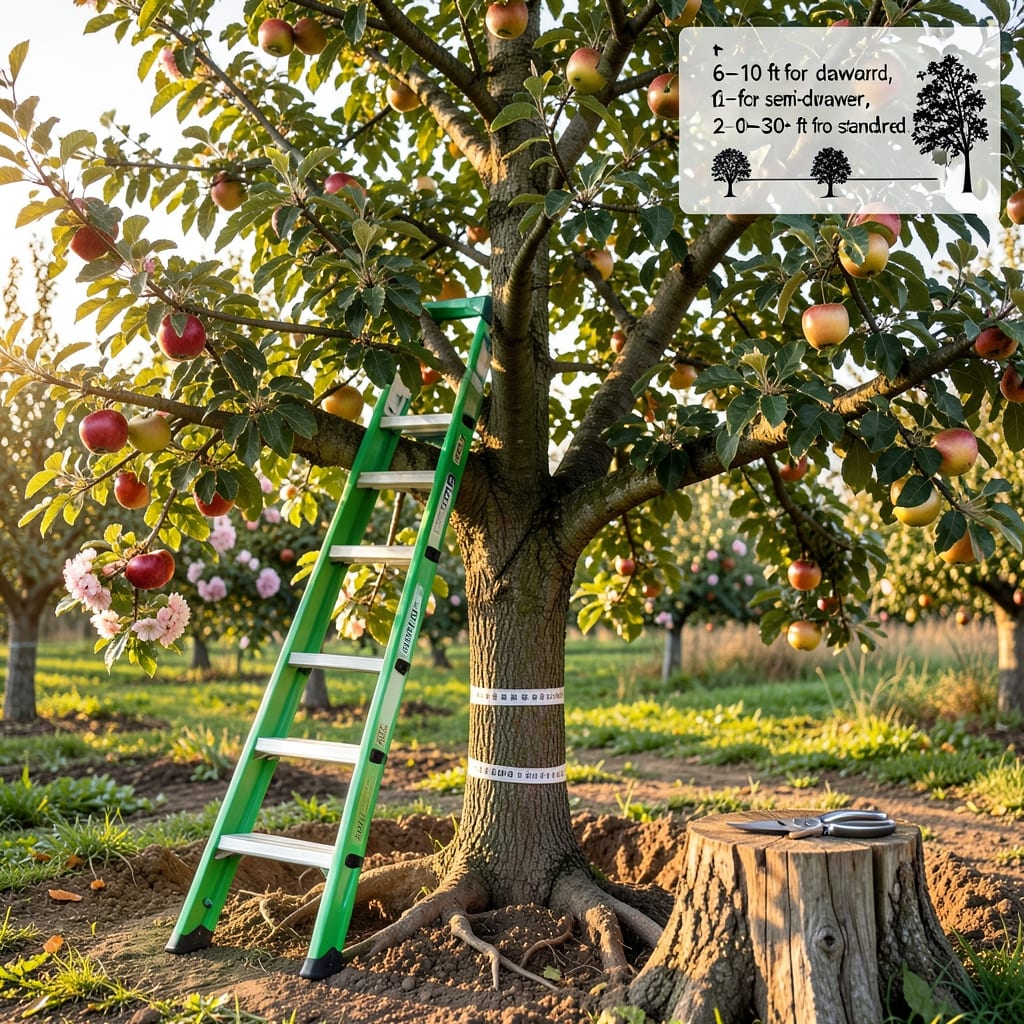
Wondering how tall can an apple tree grow in your backyard? The answer isn’t just about picking a seedling—it’s about choosing the right variety and giving it the care it needs to stay within your space. A full-grown standard apple tree can tower over 30 feet, while dwarf varieties stay compact at just 6-12 feet, making them perfect for small gardens or even containers.
Whether you’re dreaming of a 🍎 tree that fits neatly between your patio chairs or one that stretches toward the sky, the key lies in selecting the right rootstock and pruning strategy. I’ll break down the differences between dwarf, semi-dwarf, and standard apple trees so you can pick the perfect fit for your space—and your fruit goals.
Growing an apple tree isn’t just about height—it’s about balance. The right pruning techniques can keep your tree manageable while maximizing fruit production, even in tight urban spaces. Let’s explore how to control your tree’s growth without sacrificing those sweet, homegrown apples you’ve been craving.
From choosing compact varieties like ‘Liberty’ to mastering pruning methods like espalier, I’ll share the secrets to keeping your apple tree at the ideal height for your garden. Ready to turn your small space into a thriving orchard? Let’s get started.


Apple tree height by variety: dwarf, semi-dwarf, and standard size comparison
When planning your apple tree orchard, the first question is always: how tall can an apple tree grow? The answer depends entirely on the rootstock and variety you choose. Standard apple trees can reach 20-40 feet, while dwarf varieties stay between 6-12 feet, making them ideal for small gardens or containers. The right choice can mean the difference between a towering tree and one that fits perfectly in your space.
Rootstock determines 90% of your tree’s mature height. Dwarf rootstocks like M.9 or B.9 keep trees compact, while semi-dwarf rootstocks like MM.106 or MM.111 offer a middle ground. Standard rootstocks like seedling or Malling-Merton let trees grow to their full potential. Let’s break down the key differences so you can pick the perfect size for your garden.
| Type | Mature Height | Rootstock Examples | Space Needs | Best For |
|---|---|---|---|---|
| Dwarf | 6–12 ft | M.9, B.9, G.935 | 3–6 ft spacing | Containers, small yards, urban gardens |
| Semi-Dwarf | 12–18 ft | MM.106, MM.111 | 8–12 ft spacing | Backyards, larger containers, mixed borders |
| Standard | 20–40 ft | Seedling, Malling-Merton | 15–20 ft spacing | Orchards, rural properties, statement trees |
| 🌱 Pro Tip: Columnar varieties (e.g., 'Columnar Honeycrisp') grow just 8–12 ft tall but stay narrow—perfect for tight spaces! | ||||
If you’re working with limited space, dwarf apple trees are your best bet. Varieties like 'Anna' or 'Liberty' on M.9 rootstock stay under 8 feet and produce high-quality fruit just like their larger counterparts. These trees also fruit earlier, often within 2–3 years of planting, compared to 5+ years for standard trees.
For a balance between size and productivity, semi-dwarf trees are a fantastic middle ground. They require slightly more space but still fit well in most backyards. 'Honeycrisp' or 'Gala' on MM.106 rootstock typically reach 12–16 feet, making them easy to manage with basic pruning. Plus, they’re disease-resistant and produce abundant fruit.
Standard apple trees are the classic choice for large properties or orchards. If you have the space, they offer the most fruit production and longevity, often living for 50+ years. However, they require regular pruning to maintain shape and prevent overgrowth. Varieties like 'Granny Smith' or 'Fuji' thrive on standard rootstock but need 15+ feet of clearance.
One game-changer for small gardens is columnar apple trees. These trees grow tall and narrow, reaching 8–12 feet but only 2–3 feet wide. They’re perfect for espalier training or growing against a fence. Varieties like 'Columnar Red Delicious' or 'Columnar Golden Delicious' produce high yields in minimal space, making them ideal for urban gardeners.
Remember, pruning plays a huge role in controlling height, even with dwarf varieties. Without proper care, even a dwarf apple tree can grow taller than expected. I’ll cover space-saving pruning techniques in the next section, but for now, focus on choosing the right rootstock for your space. Whether you’re dreaming of a tiny patio tree or a grand backyard orchard, the right variety will make all the difference.
Ready to pick the perfect apple tree for your garden? Start by measuring your space and matching it to the mature height of the variety you choose. With the right rootstock and a little pruning, you’ll be enjoying homegrown apples in no time—no matter how small your yard is! 🍏
Space-saving pruning techniques to control apple tree height
Once you’ve chosen your apple tree variety, the next step is keeping it at the perfect height for your space. Even dwarf apple trees can grow taller than expected without proper pruning techniques. The key is to prune at the right time—late winter or early spring—and use methods like central leader training or espalier to shape your tree. These techniques not only control height but also improve fruit production by increasing airflow and sunlight exposure.
For small gardens, I recommend starting with a central leader structure. This means training one main vertical stem with scaffold branches spaced evenly around it. By removing competing branches early, you encourage a single strong trunk that grows upward rather than outward. This method works especially well for columnar varieties, keeping them narrow and tall while preventing them from becoming too wide.
- 🌿 Step 1: Prune in Late Winter – Remove dead or crossing branches before buds swell. This prevents disease and encourages new growth in the right direction.
- 🪴 Step 2: Train the Central Leader – Select one strong vertical branch as the main trunk. Remove competing leaders to avoid a multi-trunk mess.
- ✂️ Step 3: Thin Out Branches – Keep scaffold branches 6–12 inches apart and remove any that grow inward or downward to improve sunlight access.
- 🍏 Step 4: Use Espalier for Walls/Fences – Train branches horizontally against a support to create a flat, narrow tree that fits in tight spaces.
- 📅 Step 5: Annual Maintenance – Prune lightly in summer to control height and shape. Avoid heavy pruning after mid-July to prevent late-season growth that won’t harden off before winter.
If you’re working with limited space, espalier is a game-changer. This ancient technique involves training branches along a trellis, wall, or fence in a flat, decorative pattern. Not only does it keep your tree compact, but it also makes harvesting easier and creates a stunning visual display. For example, a 3-foot-wide espalier can produce just as many apples as a 10-foot-wide standard tree—with far less space taken up!
For dwarf apple trees, focus on light pruning to maintain their size. Over-pruning can stress the tree and reduce fruit production. Instead, aim to remove only 10–20% of the canopy each year. Use sharp, clean tools to make cuts just above a bud or branch collar to promote faster healing. Regular pruning also helps prevent disease by improving airflow and reducing humidity in dense foliage.
One common mistake is pruning at the wrong time. Avoid heavy pruning in fall or winter when the tree is dormant, as this can leave it vulnerable to cold damage. Instead, time your pruning to late winter or early spring, just before new growth begins. This ensures your tree has time to recover and produce fruit without stress. For container-grown trees, prune more frequently—every 4–6 weeks during the growing season—to keep them from outgrowing their pots.
Remember, the goal isn’t just to control height—it’s to create a healthy, productive tree that fits your space. With the right pruning techniques, even a standard apple tree can be kept manageable in a backyard. Start small, observe how your tree responds, and adjust your approach as needed. Before you know it, you’ll have a well-shaped, fruit-bearing tree that’s the perfect height for your garden! 🪴