
Trees
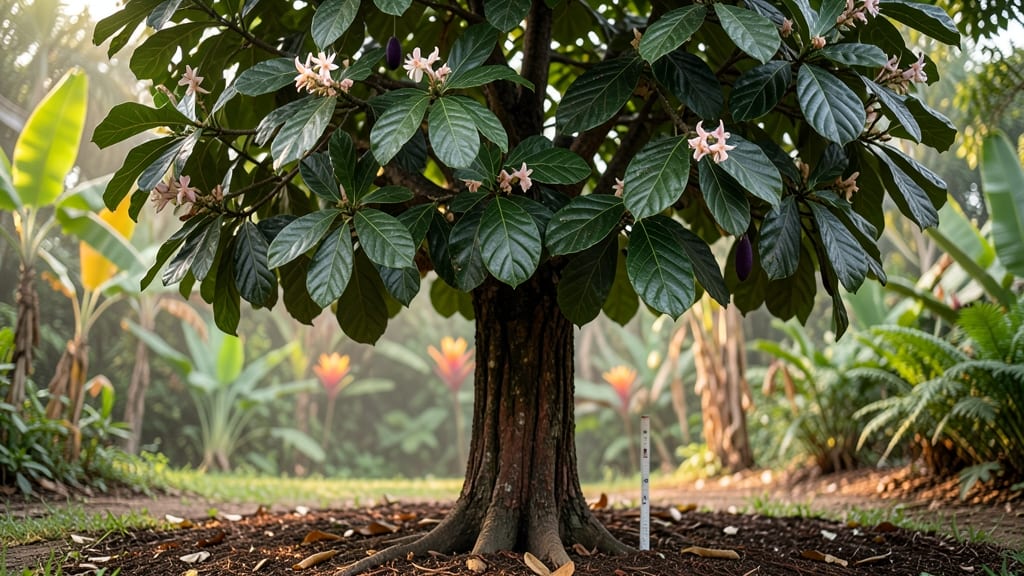
If you’ve ever wondered how tall cacao trees do grow—maybe even for homemade chocolate—you’ve probably wondered just how towering these tropical giants can become.
The answer isn’t as simple as you’d think, because cacao trees (Theobroma cacao) can stretch dramatically depending on whether they’re wild or carefully cultivated.
In the wild, these trees often reach towering heights of 20 to 30 feet, their broad canopies providing shade for entire ecosystems. But in farms or home gardens, they’re usually pruned to a much more manageable 10 to 15 feet, making them easier to harvest.
The difference comes down to sunlight, soil, and even pruning techniques—factors you’ll want to consider if you’re planning your own cacao patch.
What’s fascinating is how quickly these trees grow in their early years. A sapling can shoot up 3 to 5 feet in just a few seasons, but their final height is shaped by whether they’re left to grow wild or trained for cultivation.
For gardeners, this means thinking ahead about space and support—especially if you’re aiming for dwarf varieties that stay under 6 feet.
Whether you’re curious about the wild giants of cacao forests or the compact trees perfect for your backyard, understanding these height differences is the first step to growing your own. Let’s break down what affects their growth—and how you can shape yours.


Cacao tree height in the wild: from underbrush to canopy giants
Wild cacao trees (Theobroma cacao) exhibit one of nature’s most fascinating height variations, stretching from underbrush shrubs to towering canopy giants. In dense rainforests, these trees often grow 10–15 feet tall, competing for sunlight through the dense foliage.
However, when sunlight filters through gaps in the canopy, some wild varieties can reach 20–25 feet, their broad leaves reaching skyward like tropical sentinels.
Their height depends heavily on sunlight exposure and forest density. In shaded understories, cacao trees remain shorter—6–10 feet—while those in sunlit gaps grow taller to maximize photosynthesis.
This natural variation showcases cacao’s adaptability, a trait that makes it both resilient and challenging to cultivate outside its native tropical habitats.
Regional differences also play a role. In South American rainforests, wild cacao trees often stay 10–15 feet tall due to thick canopy cover, while in West African forests, some varieties stretch toward 20 feet in open areas.
These differences highlight how climate and competition shape cacao’s growth patterns in the wild.
🌿
| Environment | Sunlight Exposure | Typical Height | Growth Notes |
|---|---|---|---|
| Dense Rainforest | Low (shaded) | 6–10 ft | Slow growth; competes for light |
| Forest Gaps | Moderate (dappled) | 10–15 ft | Balanced growth; healthier pods |
| Open Canopy | High (full sun) | 15–25 ft | Fast growth; risk of sunburn |
| Riverbanks | Variable (sunlight fluctuations) | 8–20 ft | Influenced by water levels |
In their natural habitat, cacao trees also exhibit seasonal growth fluctuations. During the wet season, when humidity is high and rainfall is abundant, trees grow more rapidly, sometimes adding 2–3 feet in a single season.
Conversely, the dry season slows growth, with some varieties even shedding leaves to conserve energy. This cyclical pattern is why wild cacao trees rarely exceed 25 feet—their growth is tightly linked to the forest’s rhythms.
One fascinating adaptation is their branching structure. Wild cacao trees often develop low-hanging branches to maximize light capture, creating a bushy, multi-stemmed appearance. This trait isn’t just for aesthetics—it helps them reach sunlight in crowded forests while also supporting heavier pod loads.
Without human intervention, these trees grow in a way that optimizes survival, not yield.
For gardeners curious about wild cacao’s height, remember: sunlight is the key variable. In a home garden, replicating the dappled light of a forest gap can encourage taller growth, but avoid direct midday sun, which can scorch young leaves.
If you’re planting cacao in a container, expect slower height growth—5–10 feet—due to root restrictions, but with careful pruning, you can shape the tree to fit your space.
🌳
Understanding wild cacao’s height variations also explains why cultivated varieties are often shorter. Farmers selectively breed and prune trees to keep them 10–15 feet tall, making harvesting easier and increasing pod production per square foot.
This domestication process highlights how humans have shaped cacao’s growth to suit our needs—whether for chocolate production or home gardens.
If you’re dreaming of growing your own cacao tree, start small with young saplings (1–3 feet tall) and monitor their growth rate.
With the right soil pH (5.0–6.5), partial shade, and consistent moisture, you can guide your tree toward its natural height potential—whether that’s a modest 10 feet or a towering 20 feet in ideal conditions.
Cultivated cacao tree height: managing growth for chocolate production
When cacao trees transition from wild understory plants to cultivated crops, their height becomes a carefully managed factor for chocolate production. Farmers prioritize optimal pod yield over sheer height, often pruning trees to maintain a 10–15 ft (3–4.5 m) range.
This controlled height makes harvesting easier while maximizing sunlight exposure for pod development. Without intervention, cultivated trees can still reach 20–25 ft (6–7.5 m), but this reduces efficiency.
Three primary cacao varieties—Forastero, Criollo, and Trinitario—exhibit distinct growth patterns. Forastero, the most common variety, typically grows 12–18 ft (3.6–5.5 m) with aggressive pruning, while Criollo varieties often stay shorter at 10–14 ft (3–4.3 m) due to their slower growth rate. Trinitario, a hybrid, falls between the two at 12–20 ft (3.6–6 m), depending on climate.
Climate plays a pivotal role in height management. In humid tropical regions like West Africa, trees grow faster and taller due to year-round warmth, while drier subtropical zones (e.g., parts of Southeast Asia) produce shorter, bushier trees.
Farmers in high-altitude areas (up to 1,500 ft) often prune more aggressively to compensate for slower growth, ensuring trees stay within the 10–15 ft (3–4.5 m) ideal range for mechanical harvesting.
| Variety | Natural Height Range | Cultivated Height (Pruned) | Climate Adaptation |
|---|---|---|---|
| Forastero | 15–25 ft (4.5–7.5 m) | 10–15 ft (3–4.5 m) | Fast growth in humid zones |
| Criollo | 10–14 ft (3–4.3 m) | 8–12 ft (2.4–3.6 m) | Slower growth; sensitive to heat |
| Trinitario | 12–20 ft (3.6–6 m) | 10–16 ft (3–4.8 m) | Hybrid resilience; mid-range growth |
Note: Pruning schedules vary by region—adjust based on local climate and harvest goals.
Pruning isn’t just about height control; it’s a strategic practice to improve air circulation and pod accessibility. Farmers remove suckers and water sprouts regularly to direct energy toward fruit-bearing branches.
In shade-grown systems (common in organic farming), trees may stay slightly shorter—around 12–16 ft (3.6–4.8 m)understory canopy limits vertical growth while boosting pod quality.
For home gardeners aiming to replicate commercial practices, start with grafted seedlings of your chosen variety to ensure predictable growth. Monitor your tree’s branch angle: ideal cacao branches grow at 45–60 degrees from the trunk, which naturally limits height while maximizing pod production.
If your tree exceeds 15 ft (4.5 m), prune in late winter to encourage compact, bushier growth for easier maintenance.
Remember, the goal isn’t just a tall cacao tree—it’s a productive one. Balancing height with yield is the key to growing cacao that rivals the best chocolate plantations.
With the right techniques, even a 10 ft (3 m) tree can yield enough pods for 50+ lbs of cacao beans annually—enough for homemade chocolate! 🌱