
Trees
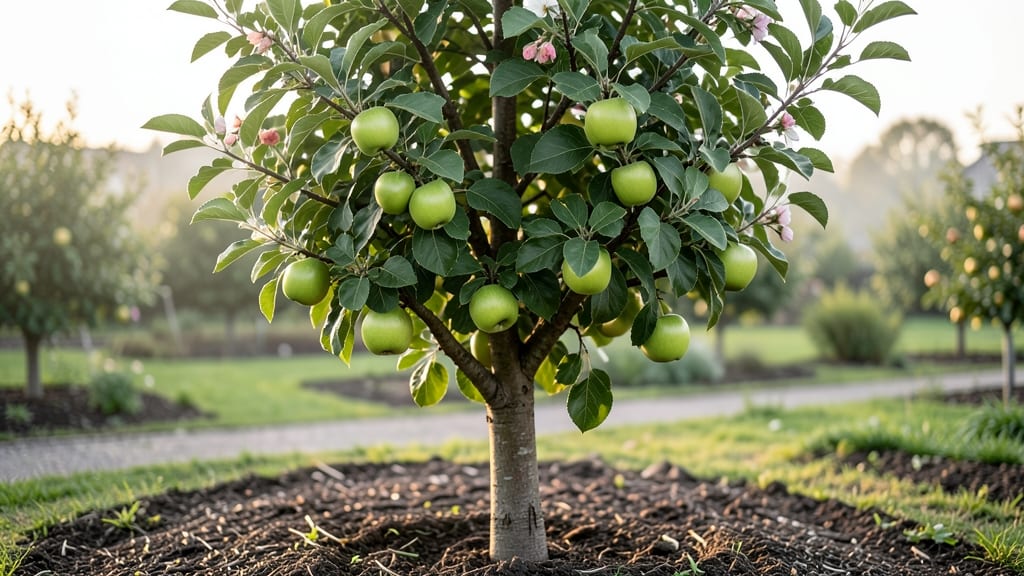
If you’ve ever wondered "how tall do Granny Smith apple trees grow", the answer might surprise you—these crisp, tangy producers can tower up to 25 feet if left to their own devices!
But don’t let that intimidate you. With the right variety and care, you can grow a 🍏 Granny Smith that fits even the smallest backyard or balcony.
The key lies in choosing dwarf or semi-dwarf rootstock, which keeps mature heights between 6–12 feet. That’s still taller than most people, but with smart pruning and spacing, you can enjoy homegrown apples without sacrificing your patio space.
Whether you’re in USDA Zone 6a or another region, these space-saving tricks work year-round.
Beyond size, proper planting in April–May sets the stage for healthy growth. Full sun and consistent watering (especially during fruit development) ensure your tree thrives—while strategic pruning keeps it manageable.
Ready to turn your small garden into an apple orchard? Let’s explore the best ways to control height and maximize your harvest.
From espalier training to container growing, there’s a solution for every space. You’ll learn how to prune for shape, select the right variety for your garden, and even grow Granny Smiths in pots. The best part? These methods work for first-time growers and seasoned gardeners alike. Let’s get started!


Granny Smith apple tree height: mature size and growth rate explained
Granny Smith apple trees are famous for their tart, crisp flavor, but their mature height often surprises first-time growers. Without proper care, these trees can tower over your backyard, reaching heights of 15 to 25 feet when grown on standard rootstock.
That’s taller than a two-story house! However, with the right rootstock selection and pruning techniques, you can keep them much smaller—even in tight spaces.
The key to controlling height lies in the rootstock you choose. Standard Granny Smith trees grow the tallest, while dwarf varieties (grafted onto M9 or B9 rootstock) stay between 6 and 12 feet tall.
Semi-dwarf rootstocks (like MM106) produce trees that reach 12 to 18 feet, making them a great middle-ground option for medium-sized yards. Even columnar varieties (grafted onto M9 columnar rootstock) grow just 8 to 10 feet tall but produce fruit along a narrow, upright trunk.
Here’s how their growth compares over time: In their first year, Granny Smith saplings grow 3 to 5 feet tall. By year two, they’ll reach 6 to 10 feet, and by year three, they can surge to 10 to 15 feet if left unpruned.
The growth rate slows slightly after that, but without maintenance, a standard tree can add 2 to 3 feet per year until it matures. Climate plays a role too—warmer regions with longer growing seasons may see faster height increases.
🍏
Granny Smith Apple Tree Height Comparison
| Variety | Rootstock | Mature Height | Growth Rate (First 3 Years) | Best For |
|---|---|---|---|---|
| Standard Granny Smith | Seedling | 15–25 ft | 3–5 ft/year | Large properties, orchards |
| Dwarf Granny Smith | M9 or B9 | 6–12 ft | 2–4 ft/year | Small yards, containers |
| Semi-Dwarf Granny Smith | MM106 | 12–18 ft | 3–5 ft/year | Medium yards, urban gardens |
| Columnar Granny Smith | M9 Columnar | 8–10 ft | 1–2 ft/year | Tiny spaces, patios |
If you’re planting in a small garden, opt for a dwarf or columnar variety—they’re perfect for patios, balconies, or even large containers. Even these compact trees need 6 to 8 hours of sunlight daily and well-draining soil to thrive.
Without enough light, their growth slows, and fruit production suffers. For best results, plant in full sun and amend your soil with compost before planting to encourage strong root development.
Pruning is another critical factor in controlling height. Regular pruning not only keeps the tree manageable but also improves air circulation, reducing the risk of fungal diseases like apple scab. Aim to prune in late winter or early spring before new growth begins.
Remove any suckers (shoots growing from the base) and water sprouts (vertical shoots) to direct energy toward fruit production. For dwarf varieties, you can also use espalier training to grow the tree flat against a fence or wall, saving even more space.
🌳
Climate also affects how tall your Granny Smith tree grows. In warmer climates (like USDA Zones 7–9), trees grow faster and may reach their mature height sooner.
In cooler regions (like Zone 5 or 6), growth slows in early spring and fall, giving you more time to manage height through pruning. Always check your local last frost date—planting too early can stunt root growth, while waiting too long may delay the tree’s first harvest.
One common misconception is that container-grown Granny Smith trees stay small forever. While they start smaller, they’ll still reach their mature height potential if given
Granny Smith apple tree height: mature size and growth rate explained
Granny Smith apple trees can grow taller than your two-story house if left unchecked, reaching 15–25 feet at maturity. That’s why many gardeners hesitate to plant them—until they learn about dwarf and semi-dwarf varieties that stay under 12 feet!
The height of your tree depends entirely on the rootstock it’s grafted onto, not the apple variety itself.
Standard Granny Smith trees (on seedling rootstock) grow 15–25 feet tall, while semi-dwarf varieties (like those on M.9 or M.26 rootstock) top out at 12–18 feet.
For small gardens or containers, columnar Granny Smiths (grown on spindle or columnar rootstock) stay 8–10 feet tall—perfect for urban spaces! Climate and pruning also play a role, but rootstock is the biggest factor.
| Rootstock Type | Mature Height | Growth Rate | Best For |
|---|---|---|---|
| Seedling (Standard) | 15–25 ft | Slow to moderate | Large properties, orchards |
| M.9 (Dwarf) | 8–12 ft | Moderate | Small gardens, backyards |
| M.26 (Semi-Dwarf) | 12–18 ft | Moderate | Medium spaces, patio planting |
| Columnar/Spindle | 6–10 ft | Fast vertical | Containers, balconies, tight spaces |
Your Granny Smith’s first-year growth will be 3–5 feet, but don’t let that fool you—these trees double in height by year three!
In USDA Zone 6a (like much of the Midwest), expect 10–15 feet by year three if using standard rootstock. Pruning in late winter (while dormant) can slow vertical growth by 30–50% while encouraging fruit-bearing branches at a manageable height.
For fastest height control, opt for columnar varieties—they grow straight up like a pole, making them ideal for containers or vertical trellises. Even in full sun (6+ hours daily), these stay narrow (under 2 feet wide), so they won’t overwhelm small patios.
Just ensure your container has drainage holes and is at least 18 inches deep to support root growth.
Climate matters too: Trees in warmer zones (7b+) grow faster but may need more pruning to prevent legginess. In cooler zones (5a–6a), growth slows slightly, giving you more time for pruning adjustments. Always mulch around the base (3–4 inches of organic mulch) to slow root expansion and keep the tree’s energy focused on fruit production instead of vertical growth.
If you’re renting or unsure about long-term space, start with a potted Granny Smith—just