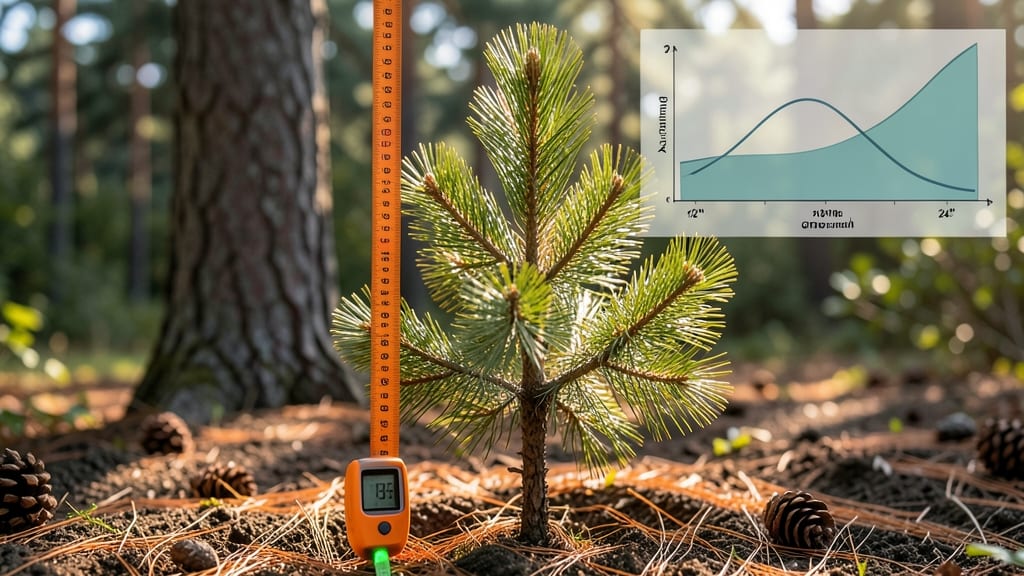
If you’ve ever planted a 🌲 pine tree and wondered how tall do pine trees grow in a year, the answer might surprise you.
Annual growth rates for pine trees vary dramatically—some species creep up by just 6 inches, while others shoot up 2 feet or more, depending on their type and growing conditions.
For most pine varieties, the first few years are the fastest growth phase, with saplings often reaching 1–3 feet in their first year. But here’s the catch: once they mature, growth slows dramatically—think 6–12 inches per year instead of a rapid climb.
Whether you’re in USDA Zone 6a or another region, understanding these patterns helps you set realistic expectations for your spring planting and long-term landscape goals.
Climate, soil quality, and even sunlight play huge roles in how much your pine tree grows annually. A well-drained, nutrient-rich site in full sun can double growth rates, while poor conditions might stunt progress.
Let’s break down the specifics so you can give your pine tree the best shot at reaching its full potential—even if that means waiting a decade or more for the 200-foot dream.
Ready to plan your pine tree’s future? We’ll cover species-specific growth rates, seasonal care tips, and how to avoid common mistakes that slow down height gains. Your backyard forest starts with the right knowledge—let’s get growing!
Dwarf
10-20 ft
Container friendly
Semi-Dwarf
20-40 ft
Most popular
Standard
50-200 ft
Full orchard size
Annual growth rates of popular pine tree species compared
Pine trees are patient giants—most don’t shoot up overnight. Their annual growth rates vary dramatically by species, age, and growing conditions. Young pine saplings often grow 12–24 inches per year, while mature trees may add just 6–12 inches annually.
Let’s break down the growth expectations for 10 common pine species so you can plan your forest project with precision.
Fast-growing pines like the Ponderosa Pine can reach 1–2 feet per year in ideal conditions, while slow growers like the Scotch Pine might only add 6–12 inches annually. The key difference?
Juvenile trees grow faster than mature ones, and species adapted to cooler climates often grow slower. Here’s what to expect from the most popular types in North America.
Pine Species
Juvenile Growth (Years 1–5)
Mature Growth (Years 10+)
Mature Height
Climate Zones
Ponderosa Pine
12–24 in/year
6–12 in/year
100–180 ft
3–7
Eastern White Pine
10–18 in/year
4–8 in/year
50–80 ft
3–6
Scotch Pine
6–12 in/year
3–6 in/year
40–60 ft
3–7
White Pine
12–20 in/year
5–10 in/year
60–80 ft
3–6
Lodgepole Pine
18–30 in/year
6–12 in/year
60–100 ft
2–6
Mugo Pine (Dwarf)
3–6 in/year
1–3 in/year
10–20 ft
3–7
Virginia Pine
8–12 in/year
4–6 in/year
30–50 ft
5–9
Jack Pine
10–16 in/year
5–8 in/year
40–60 ft
2–5
How climate zones and soil conditions double (or halve) pine tree growth
Your pine tree’s annual growth isn’t just about species—climate zones and soil conditions can double or halve its height gains each year. For example, a Ponderosa pine might grow 12–24 inches in ideal conditions but only 3–6 inches in poor soil. Understanding these factors helps you maximize growth potential.
USDA hardiness zones play a huge role. Pines in Zones 5–7 (like the Scotch pine) often grow faster than those in Zones 8–10 due to cooler temperatures and shorter growing seasons. Meanwhile, altitude effects can slow growth by 30–50% in mountainous regions.
Soil pH and drainage are critical—most pines thrive in acidic soil (pH 4.5–6.0). If your soil is alkaline, growth can stall. Well-draining soil prevents root rot, while waterlogged conditions stunt height gains by up to 50%.
Test your soil and amend it with peat moss or sulfur if needed.
Factor
Ideal Condition
Growth Impact
USDA Zone
5–7
+20–30% faster growth
Soil pH
4.5–6.0 (acidic)
Optimal nutrient uptake
Sunlight
6+ hours/day
+15–25% height gain
Altitude
Below 3,000 ft
Slower growth at higher elevations
Moisture
Well-drained
Prevents root rot, boosts growth
Sunlight exposure is another game-changer. Pines need 6+ hours of direct sun daily—partial shade can reduce growth by 40%. If your yard is shady, choose dwarf varieties like the Mugo pine, which tolerate lower light better.
To optimize growth, mulch around the base with pine needles or wood chips to retain moisture and regulate soil temperature. Avoid compacting soil near the trunk, as poor aeration slows root development and height gains.
Remember, even the fastest-growing pines take 10+ years to reach maturity. By tweaking these conditions, you’ll see noticeable differences in annual height—sometimes doubling the growth of a struggling tree. Start with soil tests and sunlight mapping for the best results! 🌲☀️