
Plants
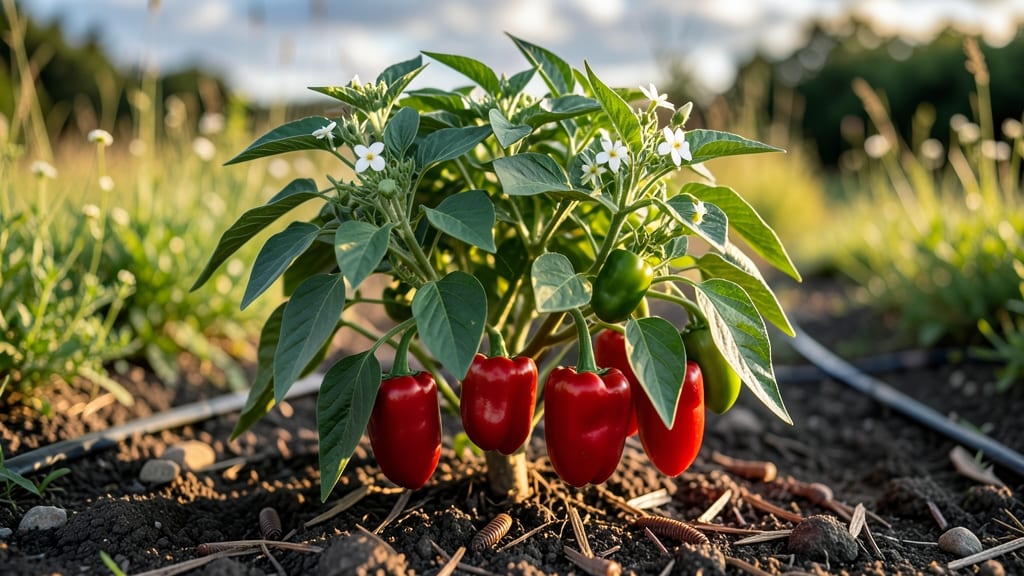
If you're planning to grow red bell pepper plants this spring, knowing how tall do red bell pepper plants grow will save you from space struggles and poor yields. These vibrant 🌶️ plants can range from compact 1.5-foot dwarfs to towering 4-foot giants, depending on the variety you choose.
The key to maximizing your harvest lies in understanding these height differences. Compact varieties like 'Lunchbox' stay manageable for small gardens, while standard types like 'Sweet Red' need more room to thrive. Without proper spacing or support, even dwarf plants can become unruly as they mature.
But here's the good news: with the right support system—whether it's simple stakes or sturdy trellises—you can grow almost any variety successfully, even in limited spaces. I'll show you exactly how to choose the right support and optimize your garden layout for these sun-loving plants.
Ready to transform your garden into a pepper paradise? Let's dive into the height ranges, support needs, and space-saving tips that will help your red bell peppers reach their full potential—without taking over your backyard.


Red bell pepper plant height variations: dwarf vs standard vs tall varieties
Red bell pepper plants come in a surprising range of heights, from compact varieties that stay under 3 feet to tall-growing types reaching nearly 5 feet. The difference often comes down to genetics—some are bred as bush types for small spaces, while others grow as indeterminate vines needing support.
Knowing your plant's height potential helps you plan spacing, trellising, and even container sizes.
Most standard red bell pepper varieties mature between 3 to 4 feet tall, making them ideal for in-ground gardens with 18-inch spacing. However, dwarf varieties like 'Lunchbox' or 'Mini Bell' stay between 1.5 to 2.5 feet, perfect for containers or urban balconies.
Meanwhile, taller varieties like 'Carmen' or 'Red Knight' can stretch 4 to 5 feet without support, though they often benefit from vertical training.
Here’s how genetics play a role: Determinate varieties (bush types) stop growing after flowering, while indeterminate varieties (vining types) keep growing all season long. This distinction affects not just height but also yield—indeterminate types produce peppers over a longer period but may need staking to prevent sprawling.
Understanding these differences helps you choose the right variety for your space and growing goals.
🌱
If you're growing dwarf varieties, you’ll save space and reduce maintenance since they don’t require trellising. However, their shorter stature can limit fruit production compared to taller types. For example, 'Lunchbox' produces smaller peppers but is perfect for 5-gallon containers on a patio.
On the other hand, tall varieties like 'Carmen' yield more peppers over time but need sturdy support to prevent breakage from heavy fruit loads.
Another factor to consider is fruit weight. Larger peppers (like those on tall varieties) can cause branches to sag or snap without proper support. This is why indeterminate types often benefit from cage systems or trellises early in their growth cycle.
Even standard-height varieties may need occasional pruning to direct energy toward fruit production rather than excessive foliage.
For container gardening, stick to dwarf or semi-dwarf varieties like 'Sweet Red' (2.5–3.5 feet) to avoid root-bound issues. These plants thrive in 10–15 gallon pots with proper drainage, making them ideal for patios or rooftop gardens.
Just ensure your container is at least 12 inches deep to accommodate their root systems.
🌿
One common mistake is assuming all red bell peppers follow the same growth pattern. Indeterminate varieties will keep growing and producing peppers until frost, while determinate types focus their energy on a single harvest before slowing down.
This difference impacts how you prune and fertilize—indeterminate plants need ongoing care to support their vertical growth, whereas determinate plants benefit from early pruning to improve airflow and reduce disease risk.
To maximize your harvest, match your garden layout to the plant’s height. For instance, place tall varieties along fences or trellises to save ground space, while bush types can be spaced closely in rows.
Always check seed packets or plant tags for mature height estimates, as these can vary even within the same variety due to growing conditions.
Red bell pepper plant height variations: dwarf vs standard vs tall varieties
Red bell pepper plants come in a surprising range of sizes, from compact bush varieties that stay under 2 feet to tall indeterminate types reaching over 4 feet. This variation is primarily due to genetics—whether the plant is bred as a determinate (bush) or indeterminate (vining) type.
Determinate varieties stop growing at a set height and produce fruit all at once, while indeterminate types keep growing and produce peppers over time.
For example, the 'Lunchbox' variety is a popular dwarf red bell pepper that tops out at just 1.5–2 feet, making it perfect for container gardens or small spaces. On the other end, 'Carmen' and 'Sweet Red' varieties can grow 3–4 feet tall, requiring more space and support.
Understanding these differences helps you plan your garden layout and choose the right variety for your space.
| Variety Type | Height Range | Growth Habit | Best For |
|---|---|---|---|
| Dwarf (e.g., 'Lunchbox') | 1.5–2.5 ft | Determinate (bush) | Containers, small gardens |
| Semi-Dwarf (e.g., 'Sweet Red') | 2.5–3.5 ft | Determinate or semi-indeterminate | In-ground gardens, raised beds |
| Standard (e.g., 'Carmen') | 3–4 ft | Indeterminate (vining) | Large gardens, trellises |
Even within the same variety, environmental factors like sunlight, soil quality, and pruning can influence height. For instance, overcrowding or poor nutrition might stunt growth, while rich soil and full sun encourage taller, more vigorous plants.
If you’re growing indeterminate varieties, expect them to keep growing until frost, while determinate types will focus energy on fruit production once they reach maturity.
Choosing the right height also impacts harvest efficiency. Taller plants may produce more peppers but require staking or trellises, while dwarf varieties are easier to reach but yield less.
For example, 'Lunchbox' might give you 10–15 peppers per plant, while a 4-foot 'Carmen' could yield 30+ peppers if properly supported. Balance your space and goals when selecting varieties.
If you’re new to growing red bell peppers, start with a semi-dwarf variety like 'Sweet Red' to practice spacing and care. These plants strike a balance between manageable height and high yields, reducing the need for complex support systems while still providing plenty of peppers for your kitchen.
🌱