
How To
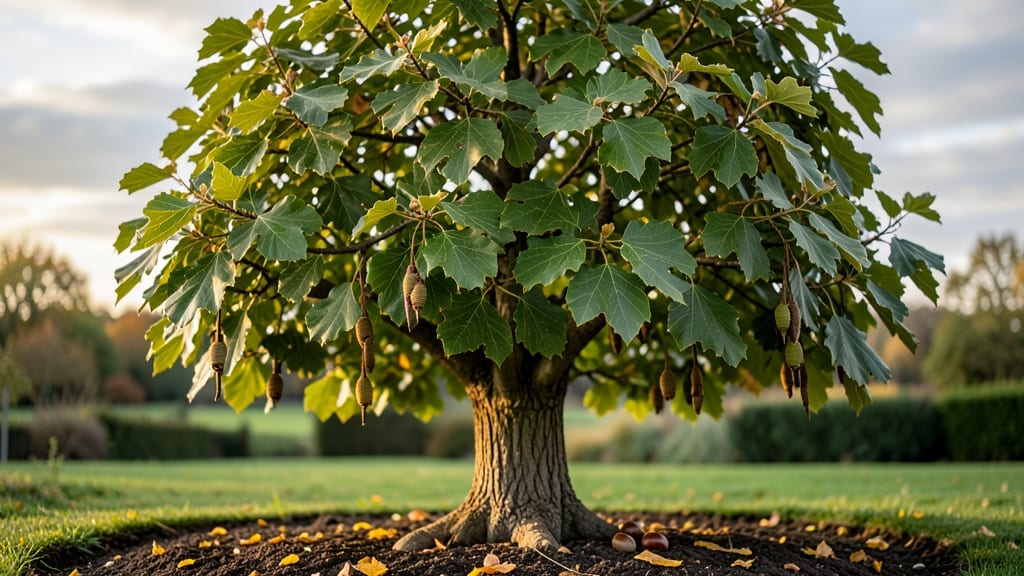
If you've ever wondered how tall does a chestnut tree grow, you're not alone—this question is the first step to planning your garden's future. A towering 🌰 chestnut tree can become the centerpiece of your landscape, but its mature height varies dramatically depending on the species.
Standard chestnut trees like the American or European varieties can reach staggering heights of 40 to 80 feet, making them more suited for spacious properties or park settings. But don't let that intimidate you—dwarf varieties stay between 20 to 30 feet, perfect for smaller yards or urban gardens.
Whether you're dreaming of a majestic shade provider or a compact nut producer, understanding these growth patterns is the key to making the right choice. I'll break down the differences so you can pick the perfect chestnut tree for your space and vision.
From planting tips to long-term care, you'll discover how to manage their growth and ensure your tree thrives for decades. Let's get started!


Chestnut tree height by species: mature size ranges and growth rates
Chestnut trees are stunning additions to any landscape, but their mature heights vary dramatically depending on the species. Understanding these differences is key to planning your garden layout, especially if you're balancing shade, space, and harvest potential.
The most common types—sweet chestnut, horse chestnut, and American chestnut—each reach vastly different heights, with some towering over 80 feet while others stay compact enough for urban gardens.
For example, the European sweet chestnut (Castanea sativa) is a classic giant, often reaching 60-80 feet tall with a spread of 40-50 feet. This species thrives in Mediterranean climates but can adapt to cooler regions with proper care.
Meanwhile, the horse chestnut (Aesculus hippocastanum), though not a true chestnut, grows to 50-70 feet tall and is prized for its showy flowers and glossy nuts.
Now, let's compare the key species side by side to help you choose the right fit for your space and climate. Below, you’ll find a detailed breakdown of mature heights, growth rates, and ideal conditions for each type.
| Species | Mature Height | Growth Rate | Best Climate Zones | Notes |
|---|---|---|---|---|
| European Sweet Chestnut | 60-80 ft | Moderate (1-2 ft/year) | USDA 5-9 | Edible nuts; needs well-drained soil |
| Horse Chestnut | 50-70 ft | Moderate (1-2 ft/year) | USDA 4-8 | Non-edible nuts; showy flowers |
| American Chestnut | 70-100 ft (historically) | Fast (2-3 ft/year) | USDA 4-9 | Nearly extinct; disease-resistant hybrids available |
| Dwarf Japanese Chestnut | 15-25 ft | Slow (6-12 in/year) | USDA 5-8 | Perfect for small yards; edible nuts |
| Boulevard Chestnut | 25-35 ft | Moderate (1-1.5 ft/year) | USDA 5-9 | Columnar shape; great for urban planting |
The American chestnut historically reached staggering heights of 70-100 feet, but its near-extinction due to blight has made disease-resistant hybrids the only viable option for growers today. These hybrids still grow tall—often 50-70 feet—but with improved resilience.
If you're working with limited space, consider dwarf varieties like the Japanese chestnut or Boulevard chestnut, which top out at 15-35 feet while still producing edible nuts.
Growth rates also vary widely. Standard sweet chestnuts and horse chestnuts grow 1-2 feet per year in ideal conditions, while dwarf varieties grow much slower—often just 6-12 inches annually. This slower growth makes them ideal for container gardening or small urban plots.
For example, a Boulevard chestnut planted today could reach 20 feet in 10 years, while a standard sweet chestnut would need 20-30 years to reach the same height.
When planning your garden, consider not just the mature height but also the canopy spread. A European sweet chestnut can spread 40-50 feet wide, while a horse chestnut typically spreads 30-40 feet.
This spread is critical for spacing trees properly—planting too close can lead to competition for nutrients, stunted growth, and increased susceptibility to disease. Always follow the 3:1 rule: the space between trees should equal 3 times the diameter of the tree’s canopy at maturity.
For instance, if you’re planting a 70-foot-tall horse chestnut with a 30-foot spread, space it at least 90 feet apart from other large trees. In contrast, a 20-foot-tall dwarf Japanese chestnut with a 10-foot spread only needs 30 feet of clearance.
This careful spacing ensures each tree has room to thrive without
Chestnut tree height by species: mature size ranges and growth rates
Chestnut trees are stunning landscape specimens, but their mature heights vary dramatically between species. The American chestnut and European chestnut often reach 60-80 feet tall, making them perfect for large estates or park settings.
Meanwhile, the horse chestnut typically stays shorter at 40-60 feet, offering a more manageable option for suburban yards.
If you're working with limited space, dwarf varieties like the Japanese chestnut or Boulevard chestnut can grow just 20-30 feet tall, making them ideal for urban gardens. Understanding these differences helps you choose the right tree for your property while planning for proper spacing and future growth.
| Species | Mature Height | Growth Rate | Climate Zones |
|---|---|---|---|
| American Chestnut | 60-80 ft | Moderate (1-2 ft/year) | 4-8 |
| European Chestnut | 50-70 ft | Moderate (1-2 ft/year) | 6-9 |
| Horse Chestnut | 40-60 ft | Slow (6-12 in/year) | 3-8 |
| Japanese Chestnut | 20-30 ft | Slow (4-8 in/year) | 5-8 |
The American chestnut grows the fastest, reaching 60 feet in just 20-30 years with proper care. In contrast, the horse chestnut matures more slowly, taking 30-40 years to reach its full height.
These growth rates help you estimate when your tree will provide shade or produce nuts, so you can plan accordingly.
For smaller spaces, dwarf varieties like the Boulevard chestnut are excellent choices. These stay under 25 feet tall and grow at a manageable pace of 6-12 inches per year. Their compact size makes them perfect for patios, small yards, or even large containers with proper root pruning.
When selecting a chestnut tree, consider not just its height but also its spread. Some varieties, like the European chestnut, can spread 30-40 feet wide, while others, like the Japanese chestnut, remain more contained at 15-20 feet.
Always check spacing requirements to avoid overcrowding nearby plants or structures.
If you're planting near power lines or buildings, opt for semi-dwarf varieties or practice regular pruning to control height. With the right species and care, you can enjoy a chestnut tree that fits your space while still providing beauty and edible nuts for years to come. 🌰🌳