
How To
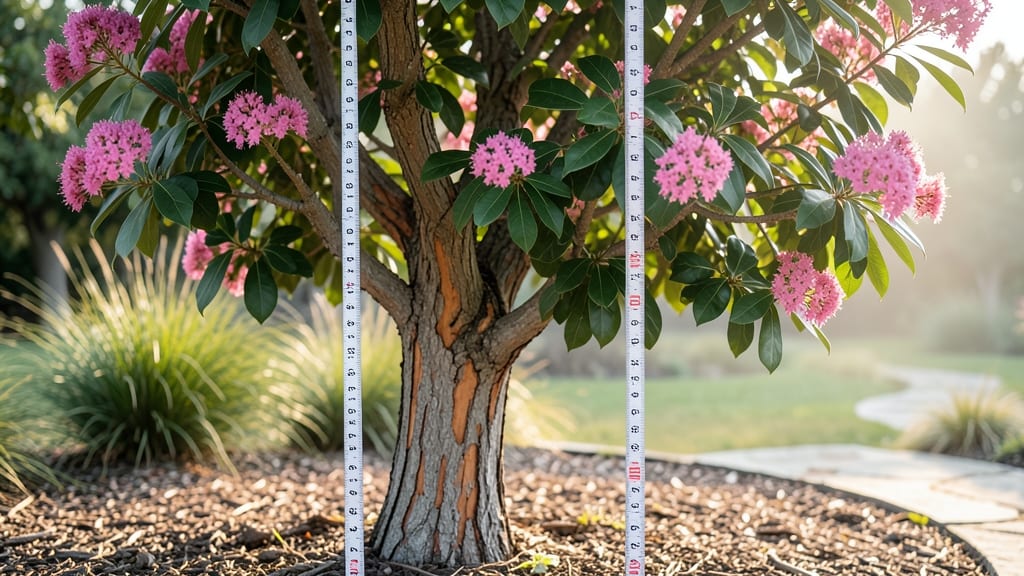
If you're dreaming of adding a 🌸 crape myrtle to your landscape but wondering how tall it'll grow, the answer depends more on the variety than you might think. Some stay as compact as a small shrub, while others reach towering heights that'll make your neighbors take notice.
Picture this: a 6-foot 'Acoma' crape myrtle fits perfectly in a small garden, while a 20-foot 'Natchez' becomes a stunning focal point in larger spaces. The key difference? Variety selection and proper spacing from day one.
Let me break down exactly what to expect from each popular type so you can plan your planting strategy like a pro.
You'll discover how pruning techniques can control height, which varieties stay manageable, and how climate affects growth rates. Whether you're working with a tight urban yard or a spacious rural plot, knowing these details means you can create the perfect crape myrtle display without any surprises.
Ready to make an informed choice? I'll walk you through the exact height ranges for top cultivars, spacing requirements, and maintenance tips that'll keep your crape myrtle thriving at just the right size for your space.


Crape myrtle height by variety: exact growth ranges for top cultivars
Crape myrtles (Lagerstroemia spp.) are famous for their vibrant summer blooms and adaptability, but their height varies wildly depending on the cultivar. If you're planning your garden layout, knowing these exact ranges will help you choose the perfect size for your space.
Some varieties stay as compact as shrubs, while others grow into towering trees that rival oaks.
The dwarf varieties like 'Acoma' or 'Tonto' top out at just 4–6 feet, making them ideal for small yards or container gardening. Meanwhile, standard varieties like 'Natchez' or 'Muskogee' can soar to 20–30 feet, requiring careful planning for their mature size.
Let’s break down the most popular cultivars and their exact height ranges.
🌸
| Variety | Mature Height (ft) | Growth Rate (ft/year) | Best For |
|---|---|---|---|
| 'Acoma' | 4–6 | 1–2 | Containers, small gardens |
| 'Tonto' | 5–7 | 1–2 | Borders, foundation plantings |
| 'Arapaho' | 10–12 | 2–3 | Medium yards, privacy screens |
| 'Natchez' | 20–25 | 3–4 | Large landscapes, specimen trees |
| 'Chanticleer' | 15–20 | 2–3 | Statement trees, focal points |
| 'Muskogee' | 25–30 | 3–4 | Large properties, shade trees |
If you're eyeing a dwarf crape myrtle like 'Acoma' or 'Tonto,' expect them to reach their mature height in just 2–3 years. These compact varieties are perfect for small gardens or even large containers, where their colorful blooms will still shine without overwhelming your space.
Their slower growth rate also makes them easier to manage with minimal pruning.
For medium-height varieties like 'Arapaho' or 'Biloxi,' plan for a 10–12 foot tree at maturity. These are versatile choices that work well as privacy screens or specimen plants in medium-sized yards.
They grow faster than dwarfs but still stay manageable with basic pruning techniques. I’ve seen 'Arapaho' thrive in USDA Zone 7 with minimal care, making it a favorite for low-maintenance gardens.
Now, if you're dreaming of a towering crape myrtle like 'Natchez' or 'Muskogee,' be prepared for a 20–30 foot giant. These varieties grow 3–4 feet per year in ideal conditions, so they’ll quickly dominate your landscape.
Plant them at least 20 feet from structures or other plants to avoid root competition and ensure they have room to spread their wide canopies. Their dramatic height makes them stunning focal points, but they’re best suited for large properties or urban landscapes with ample space.
One critical factor influencing height is your climate zone. Crape myrtles thrive in USDA Zones 6–9, but their growth rate slows in colder zones. In Zone 6, for example, a 'Natchez' might only reach 15–20 feet instead of its full 25-foot potential.
Always check your local microclimate—urban areas can be 1–2 zones warmer than rural spots, affecting growth.
For container gardening, stick to dwarf varieties like 'Acoma' or 'Centennial Spirit.' These can be grown in 15–20 gallon pots and pruned annually to maintain their shape.
Just ensure your container has drainage holes and use a well-draining potting mix to prevent root rot. I’ve successfully grown 'Acoma' in containers for
Proper spacing for crape myrtles: how far apart to plant for healthy growth
Planting crape myrtles too close together creates a crowded, competitive mess—roots tangle, airflow suffers, and blooms become sparse. The right spacing ensures your trees thrive, with room for their mature canopies.
For standard varieties like 'Natchez' or 'Tonto,' aim for 10–15 feet apart to prevent future pruning headaches. Smaller varieties like 'Acoma' need only 6–8 feet of space.
Spacing also depends on your tree's growth habit. Single-trunk varieties (like 'Muskogee') need more room—12–15 feet—to avoid structural issues, while multi-stem shrubs (like 'Centennial Spirit') can handle 8–10 feet.
Always check the cultivar tag for specific recommendations, as some dwarf varieties (e.g., 'Pocomoke') thrive in 5–6 feet of space.
🌱 Pro Tip: Dig a hole twice as wide as the root ball but only as deep as the roots. This encourages outward root growth, which stabilizes the tree and reduces future competition.
✅ DO vs. ❌ DON'T: Crape Myrtle Spacing
✅ DO:
- Space standard trees 10–15 ft apart for airflow
- Use 2:1 ratio for hole depth/width to encourage root spread
- Plant in groups of 3+ for natural windbreaks
- Mulch 3 ft around base to retain moisture
❌ DON'T:
- Avoid planting <10 ft apart—leads to root competition
- Don’t bury the graft union (if applicable) deeper than soil level
- Skip mulch rings—increases disease risk
- Plant near sidewalks/patios—roots can crack concrete
🌿 Remember: Proper spacing = healthier trees + bigger blooms.
Another critical factor is soil type. In clay-heavy soils, increase spacing by 2–3 feet to reduce waterlogging stress. Amend the soil with compost or sand before planting to improve drainage.
For container growing, dwarf varieties like 'Biloxi' can thrive in 15–20 gallon pots, but ensure pots have drainage holes to prevent root rot.
If you’re planting near a fence or wall, leave at least 8 feet of clearance to avoid future pruning nightmares. Overcrowding forces trees to compete for sunlight and nutrients, resulting in smaller blooms and weaker stems.
Always visualize the mature canopy—a 20-foot tree needs that much space to shine (literally) without becoming a nuisance.
💡 Quick Check: Measure your neighbor’s mature crape myrtle—if it’s already touching their house, they’ve likely struggled with overcrowding. Don’t let that be you! Plan ahead, and your trees will reward you with vibrant blooms for decades.