
How To
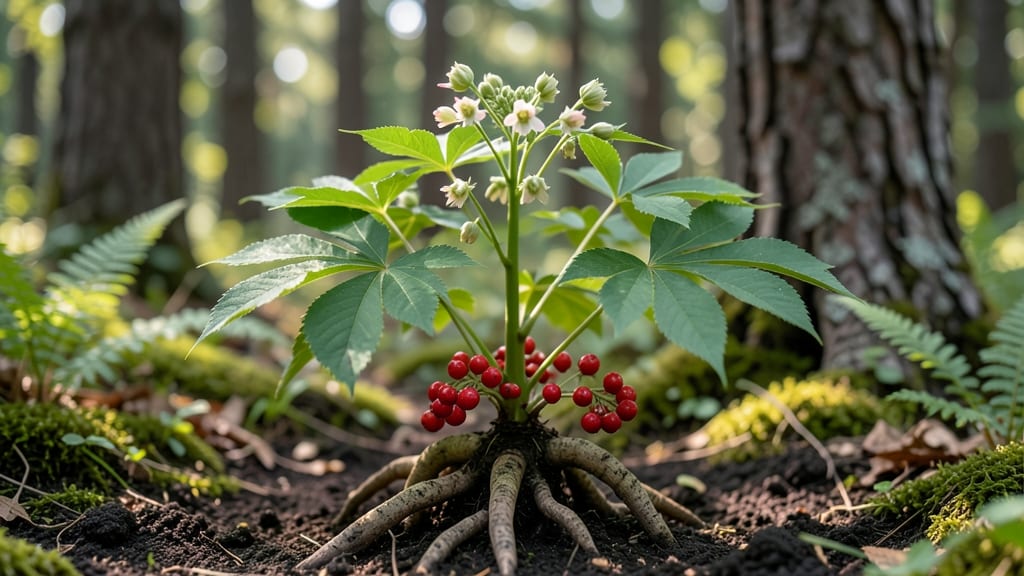
Wild ginseng height: how tall it grows naturally in forests
When ginseng thrives in its natural habitat—deep within temperate forests—its height is often misunderstood. Wild American ginseng (Panax quinquefolius) typically stays between 12 to 18 inches tall, though some mature specimens can reach up to 2 feet.
This modest stature is no accident; it’s a survival adaptation to the shaded forest floor where competition for sunlight is fierce.
The Asian ginseng (Panax ginseng), its cousin from East Asia, follows a similar pattern but often grows slightly taller—18 to 24 inches—thanks to slightly richer soil conditions in its native range.
Both species prioritize root development over vertical growth, which is why wild ginseng roots can be 3-5 times heavier than their above-ground foliage. This balance is key to their medicinal potency.
In the wild, ginseng’s height is also influenced by age and competition. Young plants (1-2 years old) may only reach 2-4 inches, while 5-6 year-old specimens—prime for harvest—typically max out at 18-24 inches.
The older the plant, the more energy it diverts to its fleshy roots, which is why foragers often miss the smaller, less visible individuals.
Here’s the catch: wild ginseng’s height is highly variable due to microclimates. In dense hardwood forests with thick leaf litter, plants may stay shorter (12 inches), while those near forest edges with slightly more light might stretch toward 2 feet.
This natural variation is why cultivated ginseng often outperforms its wild counterparts in height.
| Factor | Wild American Ginseng | Wild Asian Ginseng |
|---|---|---|
| Mature Height Range | 12–18 inches | 18–24 inches |
| Optimal Age for Harvest | 4–6 years | 5–7 years |
| Root-to-Shoot Ratio | 3:1 to 5:1 | 4:1 to 6:1 |
| Habitat Shade Level | 80–90% shade | 70–80% shade |
| Growth Rate (Per Year) | 2–4 inches | 3–5 inches |
One of the biggest misconceptions about wild ginseng is that it grows tall and bushy like a typical garden herb. In reality, its slow, deliberate growth is a strategy to avoid detection by deer and other herbivores.
The red berries it produces (if pollinated) are its only "flashy" feature, but even these are subtle compared to other forest understory plants.
For gardeners trying to mimic wild conditions, recreating that dense forest floor is crucial. Use a thick layer of mulch (3–4 inches) to suppress weeds and retain moisture, just like fallen leaves and pine needles do in nature.
Avoid direct sunlight, which can stunt growth or cause leaf scorch—a common mistake that tricks ginseng into growing taller (and weaker) as it reaches for light.
Wild ginseng’s height is also tied to its harvest window. Plants that grow too tall (over 2 feet) often indicate poor soil quality or excessive nitrogen, which reduces root potency.
Foragers know that the smaller, stockier wild ginseng plants with thick roots are the most valuable—proof that nature’s design prioritizes subterranean growth over vertical expansion.
If you’re growing ginseng in a forest garden or shaded woodland area, aim for a height of 12–18 inches by year 5. Any taller, and you may need to adjust your soil mix or light conditions.
The goal isn’t just height—it’s root mass, which is where ginseng’s medicinal magic lies. 🌿
Wild ginseng height: how tall it grows naturally in forests
Wild ginseng is a slow-growing perennial that thrives in the shaded understory of temperate forests. Unlike its cultivated cousins, wild American ginseng (Panax quinquefolius) rarely exceeds 12-18 inches in height, while Asian ginseng (Panax ginseng) stays even shorter at 6-12 inches.
This compact stature is nature’s way of adapting to low-light competition and nutrient-poor forest floors.
The height of wild ginseng depends heavily on its age and habitat. Young seedlings may only reach 2-4 inches after their first year, while 5-6 year-old plants—prime for harvest—typically max out around 1 foot tall.
Forest canopy density also plays a role; ginseng growing under dense hardwood trees stays shorter than those in sparser woodlands.
Here’s why wild ginseng stays small: it invests energy into root development (critical for medicinal potency) rather than vertical growth. The roots can grow 12-18 inches deep, while the above-ground stems remain modest.
This explains why wild ginseng is often harder to spot in the wild—it blends seamlessly into the forest floor.
| Stage | Height Range | Key Notes |
|---|---|---|
| Seedling (Year 1) | 2-4 inches | Delicate leaves; high mortality rate |
| Juvenile (Years 2-3) | 6-12 inches | Root development begins; still fragile |
| Mature (Years 4-6) | 12-18 inches | Prime harvest size; roots fully formed |
Wild ginseng’s height limitations directly impact harvest timing. Most commercial wild ginseng is dug when plants are 4-6 years old, as this is when roots reach their maximum medicinal potency.
Over-mature wild ginseng (beyond 6 years) may grow taller but often produces smaller, less potent roots due to energy diversion.
If you’re foraging for wild ginseng, remember: height isn’t the best indicator of maturity. Focus instead on leaf shape (5-7 palmate leaves) and root structure. Wild ginseng’s modest height is a survival trait—don’t let it fool you into thinking it’s underdeveloped! 🌿
For gardeners, this natural growth habit offers a valuable lesson: ginseng prioritizes root health over size. Mimic these conditions in your garden by providing partial shade and moist, well-drained soil to encourage similar growth patterns—just without the forest competition. ✂️