
How To
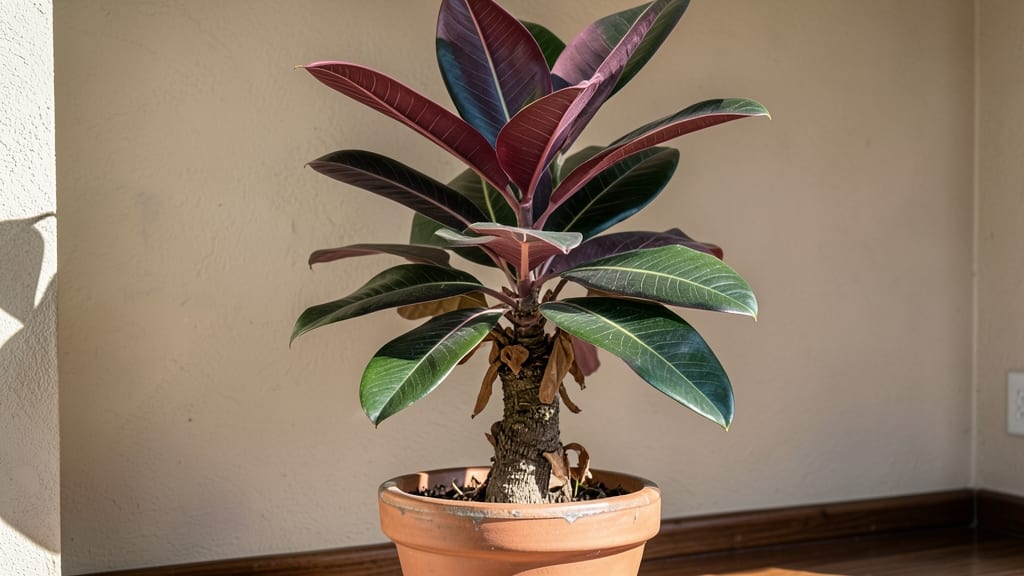
Wondering how tall a rubber plant can grow in your living room like a jungle giant? The answer depends entirely on how you care for it—and whether you're willing to rein in its growth with a few simple tricks.
Rubber plants (Ficus elastica) are natural height champions, capable of stretching 6-10 feet indoors with ideal conditions. But don't panic if your space is smaller!
With the right light exposure, pruning techniques, and pot size, you can keep this striking plant at a manageable 3-6 feet without sacrificing its lush, glossy leaves.
What most people don't realize is that rubber plants grow faster when they're happy—too much light or nutrients can send them into overdrive. I'll show you exactly how to control their height while keeping them thriving, whether you want a floor-filling statement piece or a compact countertop companion.
Ready to stop guessing and start growing? Let's dive into the science behind rubber plant height—and how to shape it to fit your space perfectly.


Natural height range of rubber plants: what to expect indoors vs. outdoors
Your rubber plant (Ficus elastica) is a growth powerhouse, but its final height depends entirely on where you grow it. Indoors, most varieties top out between 3 to 10 feet, while outdoors in tropical climates, they can soar to 50 feet or taller—like a small tree!
The key difference? Light exposure, container size, and pruning habits dictate whether your plant becomes a ceiling brush or a compact statement piece.
Under ideal conditions, a rubber plant can grow 12 to 24 inches per year indoors. Without pruning, a 3-foot plant could reach 6 feet in just 3 years. Outdoors, growth accelerates even more, especially in warm, humid zones like USDA Zone 10 or higher.
But don’t worry—we’ll cover how to control this growth naturally, even in small spaces.
🌿 Pro Tip: The ‘Decora’ variety typically stays shorter (3–6 feet) than the ‘Doescheri’ (6–10 feet), but both can be trained to your preferred height with the right care.
| Growth Factor | Indoor Height Range | Outdoor Height Range | Key Influencer |
|---|---|---|---|
| Light Exposure | 3–6 ft (low light) / 6–10 ft (bright indirect) | 10–50+ ft (full sun) | Photosynthesis rate |
| Pot Size | Root-bound = slower growth | Unrestricted = rapid growth | Space for roots |
| Pruning | Can limit to 2–4 ft | Minimal pruning = tree-like | Growth direction |
| Variety | ‘Decora’ (3–6 ft) vs. ‘Black Prince’ (6–10 ft) | All varieties grow taller | Genetic traits |
If you’re growing your rubber plant indoors, light is the #1 factor controlling height. Place it near an east or north-facing window for balanced growth, or use a grow light to prevent leggy, stretched stems.
Without enough light, your plant may grow taller but weaker, with sparse leaves. Outdoors, they thrive in partial shade to dappled sunlight, avoiding harsh afternoon rays that can scorch leaves.
Another critical factor is pot size. A rubber plant in a too-small container will focus energy on filling the pot rather than growing upward. Upgrade to a pot 2–3 inches larger in diameter every 1–2 years to encourage controlled height growth.
If you want a bushier, shorter plant, keep it slightly root-bound—just don’t let it become truly stressed.
For a visual reference, imagine your rubber plant’s growth stages: Year 1 brings 1–2 feet, Year 2 adds 2–4 feet, and by Year 3, it’s 4–6 feet tall if unpruned. Without intervention, a 10-foot rubber plant is entirely possible in 5–7 years.
But with strategic pruning (which we’ll cover next), you can keep it at a compact 3–4 feet—perfect for shelves or countertops.
Outdoors, rubber plants grow like trees, especially in tropical climates. In USDA Zones 10–12, they can reach 20–50 feet with trunks up to 1 foot in diameter.
If you’re lucky enough to grow one outside, expect faster leaf production and thicker stems, but also more maintenance to manage its size. Mulching and regular pruning are essential to keep it from becoming unmanageable.
One common misconception is that all rubber plants grow the same height. In reality, varieties like ‘Tineke’ (with pink-and-cream leaves) often stay shorter (3–5 feet) than ‘Black Prince’ (6–10 feet). Even within the same variety, growth varies based on care habits.
For example, a rubber plant in a sunny kitchen will grow taller than one in a dim corner office.
To summarize: indoors, your rubber plant’s height is your choice—with the right light, pot, and pruning, you can keep it at 3 feet or let it reach 10 feet.
Outdoors, it’s a tropical giant, but even there, pruning keeps it in check. The key is observation: watch how your plant responds to its environment and adjust care accordingly.
Ready to take control? In the next section, we’ll dive into 5 proven techniques to limit height—without harming your plant’s health. You’ll learn when to prune, how to propagate cuttings, and even how to train your rubber plant to grow in a specific shape. Let’s get started! 🪴
5 Proven techniques to control rubber plant height (without sacrificing health)
If your rubber plant is shooting up like a jungle vine, don’t panic—you can control its height without harming its health. The key lies in strategic pruning, light management, and root care.
I’ve used these methods to keep my 6-foot-tall rubber plant thriving in a cozy apartment while maintaining its lush foliage. Let’s dive into the top 5 techniques to keep your plant at your desired height.
First, pruning is your best friend for height control. Unlike many plants, rubber plants bounce back quickly after pruning, often producing bushier growth. The best time to prune is in early spring when the plant is entering its active growth phase.
Use clean, sharp pruning shears to cut just above a leaf node—this encourages new shoots to grow from that spot, creating a fuller plant. Never prune more than one-third of the plant’s height at once to avoid stressing it.
🌿
🌱 5 Proven Techniques to Manage Rubber Plant Height
- Prune strategically in spring to encourage bushier growth.
- Use training stakes to guide vertical growth downward.
- Repot every 2-3 years to prevent root-bound stress.
- Limit direct sunlight to slow rapid upward growth.
- Fertilize lightly in summer to avoid nutrient-fueled spikes.
Next, training stakes or trellises can work wonders for redirecting your rubber plant’s growth. If you want a shorter, bushier plant, gently tie the stems to a stake or trellis as they grow. This method forces the plant to grow outward rather than upward.
For example, I used a bamboo stake to train my plant into a small tree shape, and within months, it filled out beautifully without losing height. Just be sure to loosen the ties every few weeks to avoid damaging the stems.
Another game-changer is repotting. Rubber plants become root-bound quickly, which can lead to stunted growth or sudden height spikes as they search for space. Repot your plant every 2-3 years into a container that’s only 2-3 inches larger than its current pot.
This small upgrade gives roots room to spread without encouraging excessive vertical growth. Always use a well-draining potting mix with perlite or orchid bark to prevent waterlogging, which can stress the plant and cause erratic growth patterns.
Light exposure plays a huge role in height control. While rubber plants thrive in bright, indirect light, too much direct sunlight can cause them to stretch dramatically toward the light source.
If your plant is growing too tall too fast, move it further from the window or use a sheer curtain to diffuse harsh light. In low-light conditions, growth will naturally slow down, but the plant may become leggy.
The sweet spot? 4-6 hours of indirect light per day keeps growth steady and manageable.
Finally, fertilizer timing and type can make or break your height-control goals. Over-fertilizing—especially with high-nitrogen formulas—can lead to rapid, unchecked growth. Instead, opt for a balanced, slow-release fertilizer (like 10-10-10) and apply it only during the growing season (spring and summer).
Reduce feeding in fall and winter when growth naturally slows. I’ve found that light, monthly feedings in summer keep my plant healthy without fueling a growth spurt.
With these techniques, your rubber plant will stay lush, manageable, and full of life—no matter how small your space. The secret? Consistency and patience. Even a few small adjustments can prevent your plant from becoming a ceiling-bound giant! ✂️