
How To
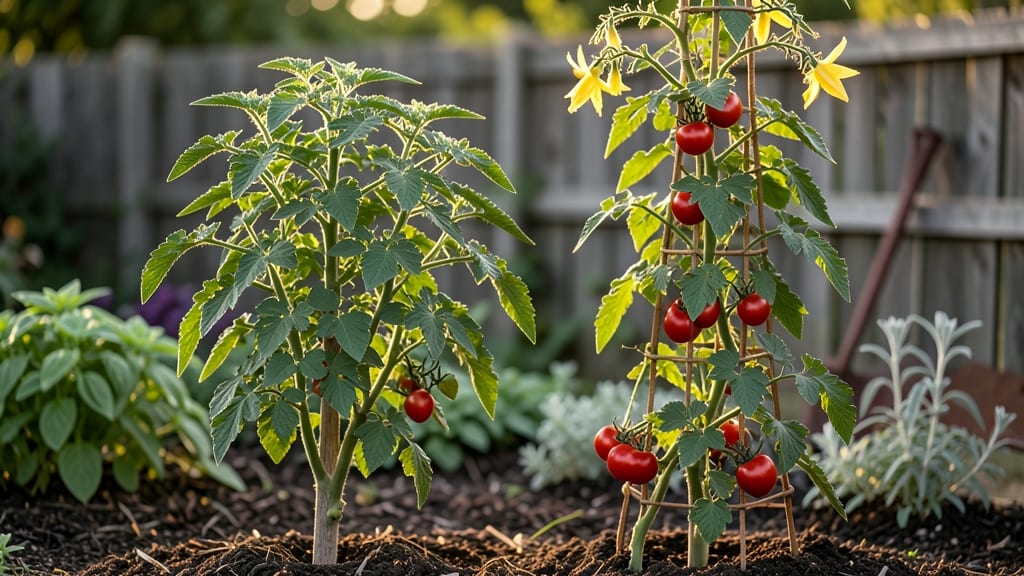
If you’ve ever wondered how tall tomato plants grow in your tiny balcony or cramped backyard, the answer depends on one key factor: their height. Some varieties stay compact enough for containers, while others can stretch taller than you are—without the right support.
Knowing these differences isn’t just about aesthetics; it’s about maximizing your harvest and avoiding common growing mistakes that could leave you with floppy, fruitless vines.
Let’s cut through the confusion. Whether you’re dreaming of 3-foot dwarf tomatoes for patio pots or planning to train 8-foot giants up a trellis, understanding your plant’s growth potential is the first step to success.
I’ll break down the height ranges for popular varieties, share spacing tricks for small spaces, and reveal how pruning and support can make even the tallest tomatoes work in your garden.
The good news? You don’t need a sprawling plot to grow tomatoes. With the right variety and a few simple techniques, you can turn limited space into a productive harvest. Ready to learn how to choose, space, and support your tomatoes for the best possible growth? Let’s get started.
From determinate bushes that stay neat and compact to indeterminate climbers that keep growing all season, each type has its own needs—and its own secrets for success.
Stick around, and I’ll show you exactly how to pick the perfect tomato for your space, no matter how big (or small) your garden is.


Tomato plant height by variety: dwarf to indeterminate giants explained
Choosing the right tomato variety starts with understanding their height potential. Tomatoes fall into three main categories: dwarf, determinate, and indeterminate, each with distinct growth patterns and space requirements. Dwarf varieties stay compact, while indeterminate giants can climb to rooftop heights if given support.
Let’s break down what to expect from each type so you can pick the perfect fit for your garden—whether it’s a 5-gallon container or a sunny backyard corner.
Height isn’t just about vertical space—it directly impacts yield, pruning needs, and support structures. A 3-foot dwarf tomato might produce fewer fruits than a 6-foot indeterminate vine, but it thrives in tight spaces.
Meanwhile, tall varieties need sturdy cages or trellises to prevent sprawling and disease. Knowing these differences helps you avoid common pitfalls like overcrowding or underutilized space.
Here’s a quick height guide to get you started: Dwarf tomatoes (1–3 ft) are ideal for balconies and windowsills, while determinate varieties (3–5 ft) work well in raised beds or in-ground plots. Indeterminate tomatoes (6–10+ ft) are the heavy hitters for vertical gardens and large containers.
The key? Match your variety to your space—and your patience for maintenance!
🌱 Visual Tip: Use a measuring tape when shopping for supports. A 6-foot trellis won’t cut it for a 10-foot indeterminate vine like 'Sungold'!
| Variety Type | Height Range | Growth Habit | Best For | Support Needs |
|---|---|---|---|---|
| Dwarf | 1–3 ft | Bushy, compact | Containers, small spaces | None or small stakes |
| Determinate | 3–5 ft | Bushy, self-supporting | Raised beds, in-ground plots | Cages or stakes |
| Indeterminate | 6–10+ ft | Vining, continuous growth | Vertical gardens, trellises | Strong trellis or tower |
Let’s dive deeper into popular varieties by height category. For dwarf tomatoes, 'Tiny Tim' and 'Patio' stay under 2 feet, making them perfect for 5-gallon buckets on patios. These varieties produce small but prolific fruits, ideal for snacking or salads.
Meanwhile, determinate favorites like 'Roma' or 'Celebrity' top out at 4–5 feet and are great for sauces and canning due to their heavy fruit loads.
Now, if you’re dreaming of bucketloads of tomatoes, indeterminate varieties are your best bet. 'Sungold' cherry tomatoes can stretch 8–10 feet with proper care, while heirlooms like 'Beefsteak' or 'Black Krim' reach 6–8 feet.
These vines keep producing all season long, but they demand regular pruning and support to stay healthy. Think of them as the marathon runners of the tomato world!
Height also affects harvest timing and frequency. Dwarf and determinate varieties produce fruit in one big flush, usually over 2–3 weeks. In contrast, indeterminate tomatoes give you continuous harvests from midsummer until frost.
This makes them ideal for urban gardeners who want fresh tomatoes all season without replanting.
One common misconception is that taller tomatoes always mean bigger yields. While indeterminate varieties can produce more total fruit, dwarf varieties often outperform in containers due to their focused energy.
For example, a 3-foot 'Patio' tomato might yield 20–30 fruits in a 5-gallon pot, while a 6-foot indeterminate vine in the same pot could struggle due to root competition. Balance variety height with container size!
For small-space gardeners, consider semi-dwarf varieties like 'Better Boy' or 'Sweet Million'. These hybrids grow 4–6 feet tall but stay more manageable than full indeterminate types.
They’re a happy medium for those who want continuous harvests without the maintenance of a 10-foot vine. Plus, their medium height works well with 5–7 foot trellises
Spacing hacks for small gardens: how to grow tall tomato plants without sacrificing space
Tall tomato varieties like indeterminate types can reach 6-10 feet or more, but that doesn’t mean they need a sprawling garden. With the right spacing hacks, you can grow even the tallest tomatoes in containers, raised beds, or small urban plots.
The key is combining vertical support, strategic pruning, and companion planting to maximize your space efficiently.
For balcony gardens or patio containers, choose dwarf or semi-dwarf varieties (1-4 feet tall) and pair them with compact trellises or wall-mounted planters.
Even indeterminate giants can thrive in 5-gallon buckets with proper care—just ensure the container is at least 12 inches deep and has drainage holes to prevent root rot.
🌱 5 Space-Saving Spacing Hacks for Tall Tomatoes
- 🪴 Vertical Trellising: Use cattle panels, bamboo stakes, or A-frame trellises to train vines upward. Save 80%+ space by growing plants 10+ feet tall in a 3-foot-wide area.
- 📋 Prune Strategically: Remove suckers (side shoots) to focus energy on main stems and fruit. Prune every 1-2 weeks to keep plants 30-50% smaller without sacrificing yield.
- 🌿 Companion Planting: Pair tomatoes with bush beans, lettuce, or basil to fill gaps in raised beds or containers. Avoid planting near corn or fennel, which compete for nutrients.
- 🔄 Succession Planting: Replace harvested plants with new seedlings every 2-3 weeks in small plots. Extends harvest season and keeps your space productive year-round.
- 🪣 Hanging Baskets: Suspend determinate varieties (like 'Tiny Tim') in hanging planters to free up ground space. Ideal for porches or decks with partial shade tolerance.
One of my favorite small-space solutions is the "cage-and-trellis hybrid" system. Install a 5-foot-tall tomato cage and weave bamboo stakes vertically through it for extra support. This setup works perfectly for indeterminate varieties like 'Sungold' or 'Cherokee Purple', allowing them to climb while still containing sprawling vines.
If you’re growing in raised beds, space indeterminate tomatoes 18-24 inches apart in rows 3 feet apart. This gives roots room to spread while keeping plants upright and accessible for pruning and harvesting.
For containers, limit yourself to 1-2 plants per 5-gallon pot—any more risks overcrowding and disease.
Don’t forget to rotate crops annually to prevent soil depletion and pests. Tall tomatoes are heavy feeders, so amend your soil with compost or aged manure before planting. In urban gardens, use self-watering planters to maintain consistent moisture without taking up extra space for watering cans.
With these spacing hacks, you can grow tomato plants up to 10 feet tall in a 5x5-foot plot—or even on a balcony! The secret is thinking vertically, pruning wisely, and choosing the right varieties for your space. Happy growing! 🌿