
How Tall Do Hydrangeas Grow: Pruning Tricks to Control Height by Type

How To

How Tall Do Hydrangeas Grow: Pruning Tricks to Control Height by Type

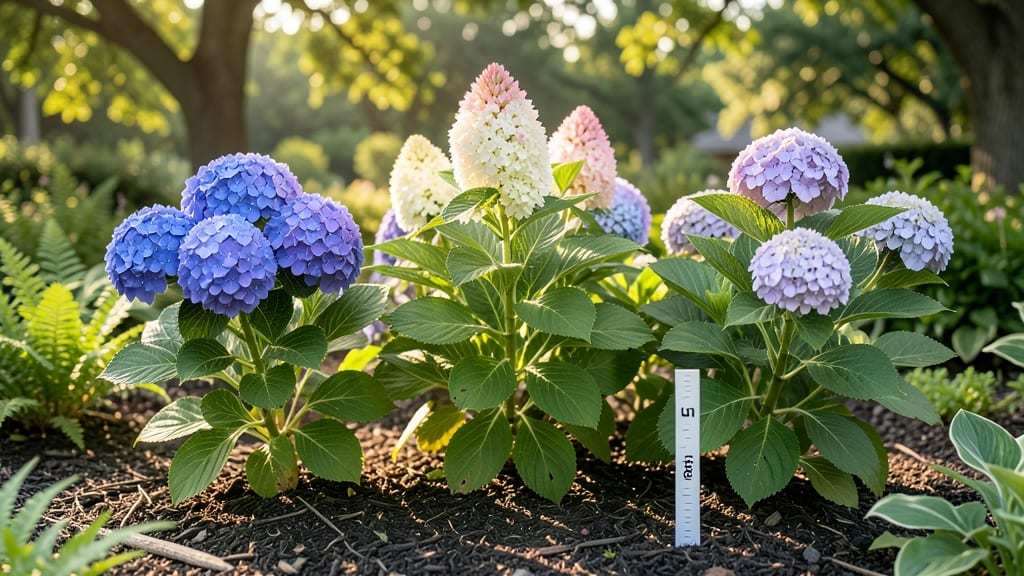
Wondering how tall hydrangeas grow before you commit to planting them? These stunning 🌸 shrubs can range from compact 3-foot beauties to towering 8-foot giants, depending on the variety—and your pruning habits.

If you’ve ever stared at a hydrangea in a garden center and wondered whether it’ll fit your space, you’re not alone. The good news? With the right knowledge, you can control their height while still enjoying those show-stopping blooms.

Some varieties stay neatly contained, while others need regular trimming to keep them in check.

Let’s break down the height expectations for the most popular hydrangea types, plus the pruning secrets that’ll help you shape them to your garden’s needs. Whether you’re working with a small balcony or a sprawling backyard, you’ll find the perfect fit.

Ready to turn your hydrangea dreams into reality? I’ll show you exactly how to choose the right variety and keep it at the ideal height—no guesswork required.

Dwarf
3-4 ft
Container friendly
Semi-Dwarf
4-6 ft
Most popular
Standard
6-8 ft
Full orchard size

Hydrangea height by type: growth expectations for 10 popular varieties

Hydrangeas come in stunning colors and diverse heights, making them perfect for everything from small containers to garden backdrops. The variety you choose determines how much space you’ll need—and how much pruning you’ll do.

For example, a mophead hydrangea like 'Endless Summer' can reach 6 feet tall, while a dwarf oakleaf like 'Little Quickfire' stays under 3 feet. Understanding these differences helps you plan your garden layout with confidence.

Most hydrangeas grow slowly in their first year but shoot up in subsequent years. For instance, a panicle hydrangea like 'Limelight' might only hit 1-2 feet in its first year but can double in height by year three.

Soil quality, sunlight, and watering also play a role—rich, moist soil with partial shade encourages faster growth, while dry conditions can stunt them. Let’s break down the mature heights of 10 popular varieties so you can pick the perfect fit for your space.

🌸

Variety Type Mature Height Growth Rate Best For
'Endless Summer' Mophead 4-6 ft Moderate Borders, foundation plants
'Limelight' Panicle 6-8 ft Fast Statement plants, tall hedges
'Annabelle' Smooth 3-5 ft Moderate Containers, cottage gardens
'Little Quickfire' Oakleaf (Dwarf) 3-4 ft Slow Small spaces, containers
'Nikko Blue' Mophead 3-5 ft Slow Shade gardens, woodland areas
'Grandiflora' Panicle 8-12 ft Fast Privacy screens, large gardens
'Vanille Fraise' Panicle 4-5 ft Moderate

Pruning tricks to control hydrangea height: when, how, and why it works

Hydrangeas are notorious for their dramatic height variations—some varieties stretch to 8 feet while others stay compact at 3 feet. The key to controlling their size lies in pruning timing and technique. Prune at the wrong time, and you risk stunting blooms or encouraging leggy growth.

But with the right approach, you can shape hydrangeas to fit containers, borders, or small gardens without sacrificing their stunning flowers.

Timing is everything. For mophead and oakleaf hydrangeas, prune in late winter or early spring before new growth appears. This removes dead wood and encourages fuller blooms.

Meanwhile, panicle hydrangeas bloom on new wood, so prune them in late winter or early spring to control height while promoting vigorous growth. Skipping this step can lead to unruly, overgrown shrubs that tower over your garden beds.

🚨 WARNING: Never prune hydrangeas in fall—this can leave them vulnerable to winter damage and reduce next year’s blooms. If you must prune later in the season, wait until after flowering and only remove 1/3 of the oldest stems to maintain shape.

⚠️ Pruning Mistakes to Avoid

  • Pruning too late in the season can stunt growth.
  • Cutting back healthy stems reduces next year’s blooms.
  • Using dull shears tears stems, inviting disease.

Pro Tip: Sterilize shears with rubbing alcohol between cuts to prevent bacterial spread.

To control height, focus on selective pruning. For taller varieties like 'Limelight' or 'Grandiflora,' remove 1/3 of the oldest stems each year to encourage new growth from the base. For compact varieties, simply trim back leggy stems to 6-12 inches above the ground in early spring.

This keeps them bushy and manageable while preventing them from outgrowing their space.

Tools matter too. Use sharp, bypass pruners for clean cuts on stems thicker than a pencil. For larger branches, opt for loppers or a pruning saw. Always cut at a 45-degree angle just above a leaf node or bud to promote healing and new growth.

Avoid leaving stubs, as they can trap moisture and invite rot.

If your hydrangeas are already too tall, don’t panic—you can still reset their height. In early spring, prune back all stems to 12-18 inches from the ground. This drastic approach may reduce blooms the first year, but it’ll encourage a fuller, more compact shape in subsequent seasons.

Pair this with regular annual pruning to maintain your desired height.

Remember, hydrangeas reward patience. With consistent pruning, they’ll thrive in their new size while producing abundant blooms. Start small—trim just a few stems this year—and gradually adjust to achieve the perfect height for your garden. Your hydrangeas will thank you with lush, vibrant flowers all season long! 🌸

★★★★★4.6(11 reviews)
Categories How To