
Plants
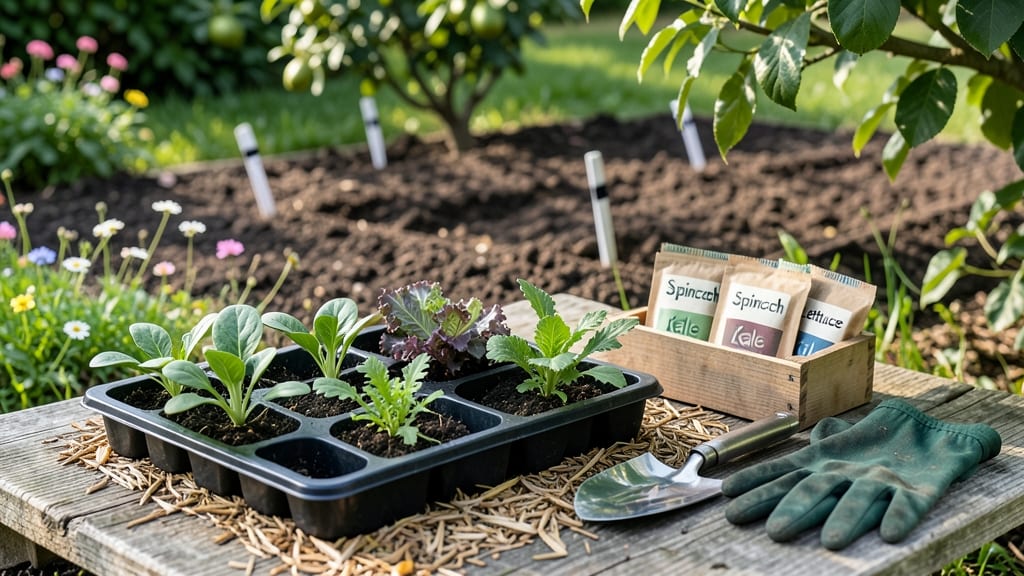
Timing your fall planting of leafy greens 🥬 can mean the difference between a bumper harvest and a sad, wilted disappointment—but most gardeners get it wrong.
The key isn’t just when you plant; it’s understanding how many weeks before frost your greens need to mature, so you can enjoy crisp salads straight from your garden until winter’s first chill.
In USDA Zone 6a, where I garden, that sweet spot lands between late summer and early fall, ideally 4-6 weeks before your first frost date. Miss this window, and you’ll either have bolting greens or plants that struggle in the cold.
But get it right, and you’ll unlock a second growing season without the summer heat stress.
What makes this timing so tricky? It’s not just about calendar dates—soil temperatures, daylight hours, and even your chosen varieties play a role.
Fast growers like arugula and baby spinach can handle cooler weather, while heartier kale and Swiss chard need that extra time to bulk up before the ground freezes.
I’ll walk you through exactly how to calculate your perfect planting window, which greens to prioritize, and how to extend your harvest with simple tricks like row covers. Ready to turn your fall garden into a salad bar? Let’s dig in.
Optimal fall planting dates for greens by US hardiness Zone
Planting leafy greens in fall isn’t a one-size-fits-all task—your USDA hardiness zone dictates the perfect window to maximize harvests before winter’s first frost. In Zone 5 (like Chicago or Boston), aim for mid-August to early September, while Zone 8 (Miami or San Diego) can plant until mid-October.
The rule of thumb? Plant 4-6 weeks before your first frost date to ensure mature greens before temperatures drop below 20°F.
To find your exact planting window, check the USDA Plant Hardiness Zone Map and subtract 6 weeks from your average first frost date. For example, if your frost arrives November 15, plant by October 1.
Southern zones (6-10) can extend planting later, but avoid sowing too close to frost—greens need 30-60 days to mature, depending on the variety.
Here’s a quick zone guide to get you started:
| USDA Zone | Planting Window | Best Varieties | Notes |
|---|---|---|---|
| Zones 3-4 (Cold Climates) | Late July to mid-August | Spinach, Kale, Arugula | Use row covers to extend season |
| Zones 5-6 (Temperate) | Mid-August to early September | Lettuce, Swiss Chard, Radicchio | Plant 4-5 weeks before frost |
| Zones 7-8 (Mild Winters) | Late August to mid-October | Collard Greens, Mustard Greens | Can overwinter in ground |
| Zones 9-10 (Warm Winters) | September to November | Microgreens, Bok Choy | Plant near frost dates for quick harvests |
Northern gardeners in Zones 3-4 should prioritize fast-maturing varieties like arugula (25 days) or baby spinach (30 days) to beat frost. Meanwhile, Zones 7-10 can afford slower growers like Swiss chard (60 days) or collard greens (50 days), which often survive light frosts and even 20°F temperatures.
Always check seed packets for days-to-maturity labels to align planting with your frost date.
Pro tip: If your fall planting window feels too tight, consider succession planting—sow half your seeds now and half 2 weeks later to stagger harvests. This works especially well for lettuce and radicchio, which mature quickly.
For example, in Zone 6, plant 50% of your seeds on August 15 and the rest on August 30 to ensure a continuous supply.
Another critical factor? Soil temperature. Greens thrive when soil stays above 40°F—if your ground is still warm (above 70°F), wait until nights cool to 65°F before sowing. Use a soil thermometer to monitor conditions, especially in Zones 9-10, where late summer heat can stress young seedlings.
Don’t overlook microclimates in your garden. A south-facing bed warms up faster and may support earlier planting than a north-facing area. Similarly, raised beds cool down more slowly in fall, giving you an extra 1-2 weeks of growing time.
Test your beds by planting a small batch of radishes (25 days) as a trial run—if they mature before frost, your greens will too.
Finally, adjust for altitude. Gardens above 5,000 feet (like Denver or Aspen) experience earlier frosts—plant 2 weeks earlier than your zone’s average. Conversely, coastal areas (e.g., San Francisco) may have milder winters, allowing later plantings.
Always err on the side of earlier planting if you’re unsure, as greens grow slower in cooler soil.
With the right timing, your fall greens will reward you with crisp, flavorful harvests long after summer tomatoes are gone. Start with your zone’s guidelines, then fine-tune based on soil temps and microclimates—your garden’s unique conditions will dictate the perfect moment to plant.
6 Critical factors that determine your greens’ fall planting window
Timing your fall greens isn’t just about counting weeks before frost—it’s a science of balancing soil temperatures, daylight hours, and plant maturity. One wrong move, and you’ll either bolt your greens or watch them freeze before harvest.
Let’s break down the 6 critical factors that dictate your perfect planting window.
First, your first frost date is the anchor. Check the USDA’s Plant Hardiness Zone Map to find your local average frost date, then work backward 4-6 weeks. This gives most cold-hardy greens (like spinach and kale) enough time to mature before winter sets in.
For example, in Zone 5, aim for mid-August planting to harvest before late October’s frost.
Pro tip: Use the USDA’s Planting Calculator (free online) to input your zip code and get a personalized planting window. Adjust for your local conditions—sometimes a 10°F temperature swing can shift your ideal planting date by 2 weeks! 🌱