
Plants
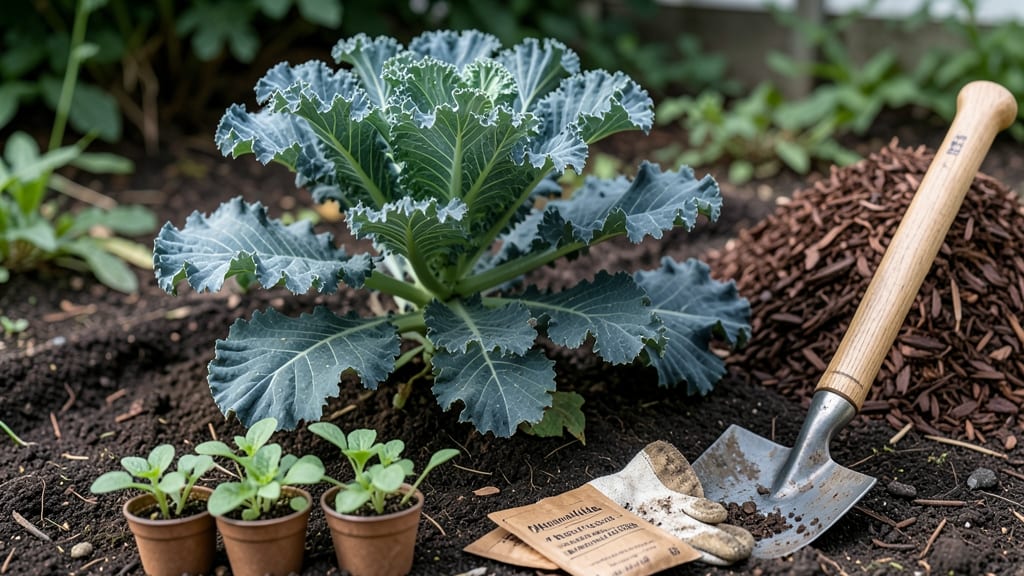
Timing your 🥬 kale planting in Michigan isn’t just about following a calendar—it’s about beating the frost while giving those hardy leaves enough time to thrive.
With Michigan’s 5b-6b climate zones, planting too early or late can mean bolting plants or stunted harvests, but get it right, and you’ll enjoy crisp, flavorful greens from spring through fall.
Most gardeners know kale loves cool weather, but Michigan’s unpredictable frost dates make the difference between a successful harvest and wasted effort.
Whether you’re in the Upper Peninsula or Southern Michigan, the key is planting 4-6 weeks before the first frost—typically between March 15 and April 15 for spring or August 1 and September 15 for fall—so your plants mature before cold snaps hit.
I’ve learned the hard way that skipping soil prep or ignoring regional frost variations can turn your garden into a science experiment. But with the right strategies—like succession planting and row covers—you can extend your kale’s growing season and avoid common mistakes that leave you with bitter or bolted leaves.
Ready to grow kale that’s crisp, abundant, and ready to harvest? Let’s break down the exact planting windows, frost-free timelines, and soil tips tailored to Michigan’s climate so you can enjoy homegrown greens all season long.
Michigan kale planting timeline by region: frost dates & hardiness zones
Michigan’s diverse climate means your kale planting window varies dramatically between the Upper Peninsula, Northern Lower Peninsula, and Southern Michigan. Kale thrives in USDA Zones 5b-6b, tolerating temperatures down to 20°F—but timing your plantings around frost dates is key to avoiding bolted, bitter leaves.
In Southern Michigan (Zone 6a), the last spring frost typically arrives by April 15, while the first fall frost hits around October 15. Gardeners in Northern Michigan (Zone 5b) face earlier frosts—May 1 for spring and September 30 for fall—requiring earlier starts.
The Upper Peninsula (Zone 4b) has the shortest season, with planting windows shrinking to April 30–September 15.
For spring plantings, aim to sow seeds 4–6 weeks before your last frost date.
In Southern Michigan, this means March 15–April 1, while Northern Michigan gardeners should start by April 15. Fall plantings should begin 8–10 weeks before your first frost, so August 1–September 1 in most regions.
Kale’s cold hardiness (down to 20°F) lets you push these windows slightly. For example, ‘Winterbor’ kale can survive 15°F frosts, extending your fall harvest into November if protected. However, heat waves above 85°F trigger bolting, so avoid planting in June–July.
🌱 Michigan Kale Planting Timeline by Region
| Region | USDA Zone | Last Spring Frost | First Fall Frost | Spring Planting Window | Fall Planting Window |
|---|---|---|---|---|---|
| Southern Michigan | 6a | April 15 | October 15 | March 15–April 15 | August 1–September 15 |
| Northern Lower Peninsula | 5b | May 1 | September 30 | April 15–May 1 | July 15–August 30 |
| Upper Peninsula | 4b | May 15 | September 15 | April 30–May 15 | July 1–August 15 |
💡 Pro Tip: Use a frost calendar from your local MSU Extension office for precise dates.
If you’re in Zone 6a (Southern Michigan), you can even try a third planting in late July for a winter harvest. Choose ‘Lacinato’ or ‘Red Russian’ kale, which handle cold better than ‘Curly Kale’.
Just be ready to mulch heavily or use row covers when temps dip below 25°F.
For container gardening, adjust your timeline by 2 weeks earlier—potted kale warms up faster and may bolt sooner. Place containers near south-facing walls or under cloche covers to extend the season. In Northern Michigan, consider starting seeds indoors in March for a head start.
Monitor your local Almanac frost predictions and adjust by 1–2 weeks if your area has a reputation for late frosts.
For example, Traverse City often sees frost in early May, while Detroit may stay frost-free until April 20. Microclimates near lakes or hills can also shift your planting window by 10+ days.
Once planted, harden off seedlings for 7–10 days before transplanting outdoors. Use shade cloth for the first week to prevent bolt stress from sudden heat. In fall plantings, prioritize direct-sown seeds over transplants—they establish faster in cooler soil.
Remember, kale’s flavor improves after frost! A light 20°F freeze sweetens the leaves, making October–November harvests the most delicious. Just avoid heavy frost damage by harvesting before 15°F hits.
How to extend kale’s growing season in Michigan: succession planting & protection tips
Michigan’s short growing season doesn’t mean you’re limited to a single kale harvest. With smart succession planting and protective strategies, you can enjoy fresh kale from early spring to late fall. The key is leveraging cold tolerance and extending your frost-free windows.
Start by planting hardy varieties like ‘Winterbor’ or ‘Red Russian’—these thrive in cooler temperatures and can handle light frosts (28°F) without damage. For maximum yield, plan two planting windows: one in early spring and another in late summer.
🌱 Spring Planting (March–April):
- Sow seeds 4–6 weeks before your last frost date (typically mid-March to mid-April in most of Michigan).
- Use row covers or cold frames to protect young seedlings from unexpected late frosts.
- For a continuous harvest, stagger plantings every 2–3 weeks until mid-May.
- 📅 Plant in early spring (March 15–April 15) for a summer harvest, or late summer (August 1–September 15) for fall/winter harvests.
- 🛡️ Use floating row covers to protect seedlings from light frosts (28°F+) and pests like cabbage moths.
- 🌡️ Choose cold-hardy varieties like ‘Winterbor’ or ‘Dwarf Blue Curled’ for extended harvests.
- ☀️ Provide 6+ hours of sunlight daily, even in cooler months, to prevent leggy growth.
- 🌱 Succession plant every 2–3 weeks in spring/fall to ensure a steady supply of fresh leaves.
For a fall harvest, plant kale in late July or August so it matures before the first frost (mid-October). Use black plastic mulch to warm the soil and row covers to shield plants from early frosts. This method can push your harvest into November in warmer microclimates.
🌿 Microclimates Matter:
- Plant kale near south-facing walls or greenhouses to capture extra warmth.
- Avoid low-lying areas where cold air pools—opt for slightly elevated beds instead.
- In USDA Zone 5b (northern Michigan), focus on early spring plantings, while Zone 6b (southern Michigan) allows for extended fall harvests with protection.
Finally, harvest strategically to prolong your kale’s productivity. Pick outer leaves first to encourage regrowth, and avoid cutting into the central stem. With these tips, you’ll enjoy homegrown kale for nearly half the year—even in Michigan’s chilly climate! 🥬