
Plants
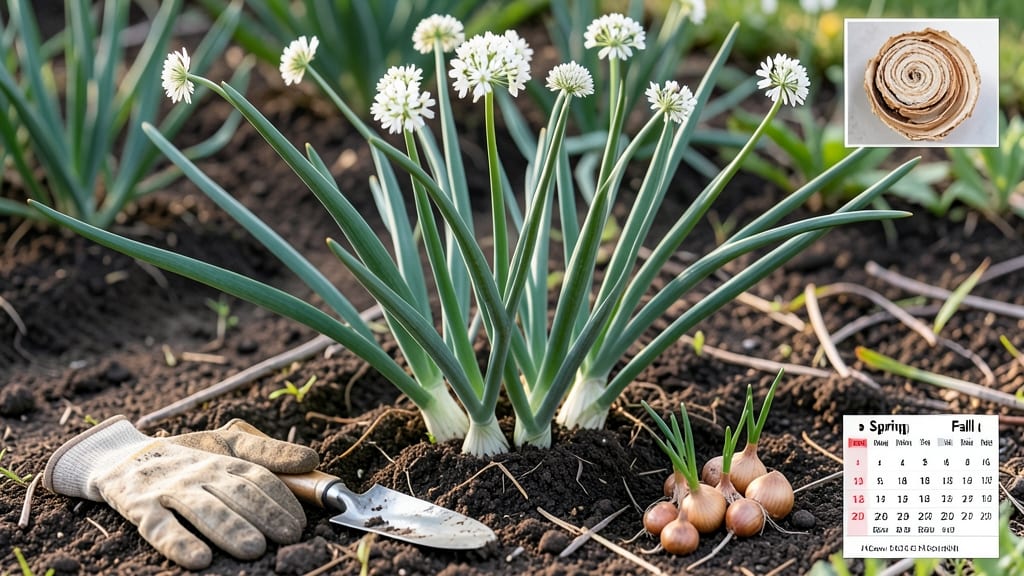
Timing your 🧅 onion planting in New Hampshire isn’t just about the calendar—it’s about beating the clock before frost strikes or your crop bolts into bitterness.
With 5a-6b winters lingering into April, getting those sets in the ground too early means freezing soil, while waiting too long risks a short growing season that leaves you with puny bulbs.
Most gardeners in NH swear by early spring planting (March–April) for full-sized onions, but did you know late summer (July–August) is your secret weapon for a second harvest? The key lies in understanding your last frost date—typically mid-April—and adjusting for soil warmth, which can be 10°F warmer than air temperature.
Whether you’re starting with sets, seedlings, or even indoor starts, I’ll break down the exact window to avoid common NH pitfalls like overcrowding or day-length sensitivity.
You’ll learn how to stretch your season with row covers and pick varieties that thrive in our 165-day frost-free window—because in New Hampshire, timing isn’t just important; it’s everything.
Let’s dive into the strategies that’ll turn your onion patch from a gamble into a guaranteed harvest, no matter how unpredictable the spring weather gets.
New Hampshire onion planting calendar: exact dates to avoid bolting
New Hampshire’s USDA Zones 5a-6b demand precision when planting onions—miss the window, and you’ll trigger bolting (premature flowering) instead of bulb development. The key is planting 4-6 weeks before your last frost date, which typically falls between April 15-30 in most regions.
For coastal areas like Portsmouth, aim for March 20-April 10, while inland zones (e.g., Concord) should wait until April 1-20.
Onions thrive when soil temperatures reach 40°F (4°C)—cold soil slows germination, while warm soil (above 70°F/21°C) accelerates growth but risks bolting. Use a soil thermometer to confirm readiness.
In NH, this usually aligns with late March to early April, but always verify with your local NH Agricultural Experiment Station for year-specific data.
For green onions (scallions), you have more flexibility—they tolerate cooler temps and can be planted 2-3 weeks earlier than bulb onions. However, if you’re growing for storage bulbs, stick to the tighter timeline to avoid bitter, pungent flavors from bolting.
| Climate Zone | Last Frost Date | Ideal Planting Window | Soil Temp Threshold | Risk if Planted Late |
|---|---|---|---|---|
| Coastal (Zone 6a) | April 10-20 | March 20-April 10 | 40-50°F (4-10°C) | Bolting, small bulbs |
| Inland (Zone 5a) | April 25-May 5 | April 1-20 | 45-55°F (7-13°C) | Slow growth, poor yield |
| Northern NH (Zone 5a) | May 1-10 | April 15-May 1 | 50-60°F (10-16°C) | Bolting, weak bulbs |
🌱 Pro Tip: Use onion sets (pre-sprouted bulbs) for a 2-week head start over seeds.
If you’re growing long-day onions (like Yellowstone or Sweet Spanish), plant them as early as February indoors under grow lights to jumpstart growth. These varieties need 14+ hours of daylight to form bulbs, so indoor starts help compensate for NH’s short spring days.
For short-day onions (e.g., Texas Early White), wait until late March—they’re more forgiving with timing but still benefit from early planting. Test your soil’s pH (6.0-7.0) before planting; NH’s acidic soils often need lime amendments to prevent stunted growth.
Don’t overlook fall planting for a second harvest! In NH, you can sow onion seeds in late July-August for small bulbs or green onions ready by next spring. These won’t store long-term but are perfect for early-season use. Use row covers to protect from early frosts.
Track your progress with a planting heat map—tools like the NH Gardeners’ Almanac provide color-coded zones for visual guidance. Mark your calendar for May 1 as the absolute latest for spring planting; after that, switch to fall prep for next year’s crop.
Remember: Onions need consistency. Once planted, maintain even moisture and full sun to prevent stress-induced bolting. Mulch with straw to regulate soil temps and retain moisture—critical in NH’s dry summers.
🌱
How to extend your onion harvest season in NH’s short growing window
New Hampshire’s 165-day frost-free window leaves little room for error when growing onions, but with the right strategies, you can stretch your harvest from a single summer bounty to a steady supply of fresh onions. The trick? Succession planting and choosing varieties that thrive in our cool, short season.
Most gardeners focus on spring planting (March–April), but late summer (July–August) is your secret weapon for a second harvest. This approach lets you take advantage of long-day onions, which need 14+ hours of daylight to bulb properly—a perfect match for NH’s summer days.
To maximize your yield, pair early-maturing varieties like ‘Sweet Spanish’ (90 days) with slower growers like ‘Yellowstone’ (120 days). This staggered approach ensures you’re harvesting onions continuously from late July through September.
🌱 NH Onion Variety Comparison
| Variety | Days to Maturity | Best Planting Time | Frost Tolerance | Harvest Window |
|---|---|---|---|---|
| Sweet Spanish | 90 days | March–April or July–August | Moderate | July–September |
| Yellowstone | 120 days | March–April only | Low | August–September |
| Red Baron | 100 days | March–April or July | High | July–September |
| Candy | 85 days | July–August | Very High | August–September |
💡 Pro Tip: Use row covers to extend your late-summer planting window by 2–3 weeks, protecting young plants from early frosts.
Row covers are a game-changer in NH’s unpredictable climate. By installing them over your July–August plantings, you can push your harvest window back by 2–3 weeks, ensuring onions mature before the first frost in mid-October.
For even better results, combine row covers with black plastic mulch to warm the soil faster and give your onions a head start.
Don’t overlook green onions, either—they’re the ultimate low-maintenance crop for NH gardeners. Plant them every 3–4 weeks from April through July for a continuous supply of fresh greens. Unlike bulb onions, green onions tolerate cooler temperatures and even light frosts, making them ideal for NH’s short season.
To keep your onions thriving, monitor soil moisture closely—especially in NH’s variable spring rains. Aim for 1 inch of water per week, delivered in the morning to prevent fungal diseases. Mulch with straw to retain moisture and suppress weeds, which is critical in NH’s rocky soil.