
Trees
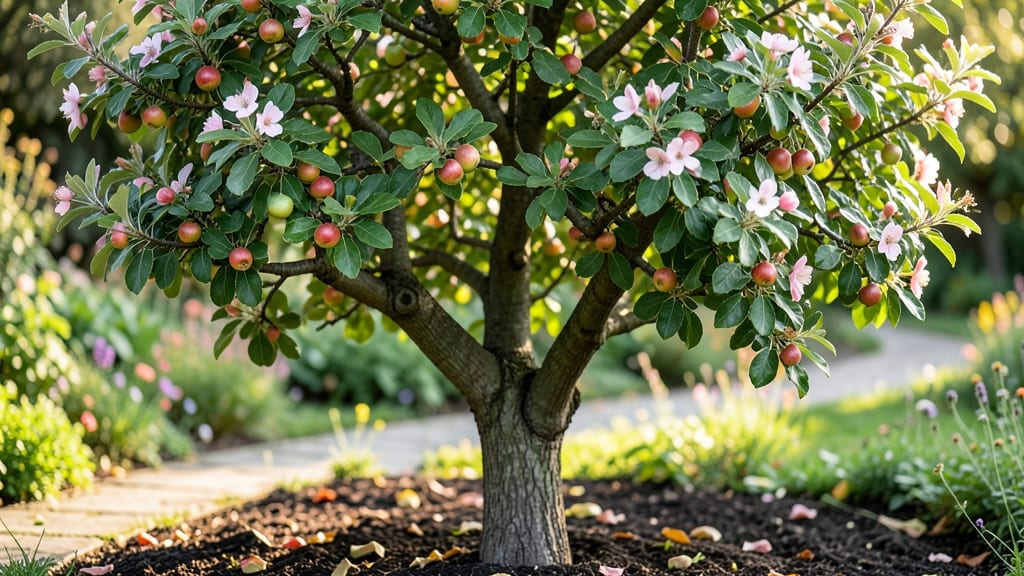
If you're wondering "how tall do crab apple trees grow", the answer might surprise you—these trees can range from compact 8-foot dwarfs to towering 25-foot giants, depending on the variety and care.
The 🍎 Crab Apple Tree isn’t just about height; it’s about transforming your space with vibrant blooms, fragrant blossoms, and edible fruit—all while staying manageable with the right pruning.
For those with limited space, varieties like 'Dolgo' stay around 15-20 feet, perfect for small gardens, while standard types like 'Adams' can reach 25-35 feet if left unchecked.
The key to controlling their height lies in understanding their growth habits and when to prune—something I’ll break down so you can shape your tree to fit your landscape, not the other way around.
What many gardeners don’t realize is that pruning isn’t just about cutting back branches—it’s about timing, technique, and encouraging stronger, more compact growth.
Whether you’re planting in USDA Zone 6a or another climate, the right approach can turn a potential space hog into a stunning, low-maintenance centerpiece that thrives for decades.
Ready to learn how to keep your crab apple tree at your desired height? I’ll walk you through the pruning timeline, tools, and tips to maintain that perfect balance—so you can enjoy its beauty without sacrificing your yard’s layout.


Crab apple tree height range by variety: from dwarf to standard sizes
Crab apple trees (Malus spp.) offer a stunning mix of ornamental beauty and fruit production, but their mature heights can vary dramatically depending on the variety you choose.
If you're working with limited space, some dwarf varieties reach just 8-12 feet, while standard types can tower up to 25-35 feet. Understanding these ranges helps you select the perfect tree for your landscape—whether you want a compact centerpiece or a towering shade provider.
The key to managing height starts with choosing the right variety. For example, the 'Dolgo' crab apple stays between 15-20 feet, making it ideal for medium-sized yards, while the 'Adams' variety can stretch to 25-35 feet if left unpruned.
Even within these ranges, growth rates differ—some varieties grow 2-3 feet per year, while others slow to just 1 foot annually once mature.
| Variety | Mature Height | Growth Rate | Best For |
|---|---|---|---|
| 'Dolgo' | 15-20 ft | 1-2 ft/year | Medium yards, privacy screens |
| 'Adams' | 25-35 ft | 2-3 ft/year | Large landscapes, shade trees |
| 'Evereste' | 12-18 ft | 1 ft/year | Small gardens, containers |
| 'Centennial' | 20-25 ft | 1.5 ft/year | Urban yards, street trees |
| 'Sargent' | 15-20 ft | 1-2 ft/year | Small spaces, patios |
When selecting a crab apple tree, consider not just height but also your yard's sunlight exposure and soil drainage. Most varieties thrive in full sun (6+ hours daily) and well-draining soil, but some, like 'Evereste', tolerate partial shade better.
If your space is tight, opt for a semi-dwarf variety like 'Centennial', which tops out at 20-25 feet but grows slower, making it easier to manage with minimal pruning.
For those with limited space, container-growing is an option—though it requires regular pruning to keep the tree under 10 feet. Use a large pot with drainage holes and a balanced fertilizer (like 10-10-10) to support growth.
Just remember: container-grown crab apples may produce fewer fruits but still offer stunning foliage and blooms.
Another factor influencing height is your climate zone. In warmer regions (USDA zones 7-9), crab apple trees often grow faster and taller due to longer growing seasons. In cooler zones (5-6), growth slows, and trees may stay shorter unless pruned aggressively.
Always check your local frost dates—early springs or late frosts can stunt growth if young trees are caught off guard.
If you're planting near power lines or structures, choose a dwarf or semi-dwarf variety and plan for regular pruning. Even standard varieties can be kept in check with proper techniques, like heading cuts in late winter and thinning cuts in summer.
The goal is to remove 1/3 of the canopy annually to maintain shape and encourage fruit production.
For urban gardeners, the 'Sargent' crab apple is a fantastic choice—it stays compact, handles city pollution well, and produces bright red fruit that birds adore. Pair it with dwarf shrubs like potentilla or spirea to create a layered, low-maintenance garden that fits even the smallest yards.
No matter which variety you choose, always plant your crab apple tree 6-12 inches deeper than the root ball and space it 15-25 feet from structures or other trees.
This gives roots room to establish without competing for nutrients, ensuring steady growth and a long lifespan—some crab apple trees live for 50+ years with proper care!
Ready to transform your space? Start by sketching your yard’s layout and measuring available space. Then, pick a variety that matches your vision—whether it’s a towering shade tree or a compact patio centerpiece.
With the right choice, your crab apple tree will become the star of your garden for decades to come. 🌳
Pruning timeline to control crab apple tree height: when and how to trim
Pruning your crab apple tree isn’t just about keeping it at a manageable height—it’s about shaping its future growth. The best time to prune is in late winter or early spring, just before new buds swell but before active growth begins.
This timing ensures you’re not removing next year’s flower buds, which form in late summer. For summer pruning, focus on light shaping after the tree finishes blooming but avoid heavy cuts, as this can stress the tree.
Start with structural pruning in the first few years to establish a strong framework. Remove any dead, diseased, or crossing branches first—they compete with healthy growth. Use clean, sharp pruners to make cuts just outside the branch collar (the swollen area where the branch meets the trunk).
This promotes faster healing and reduces disease risk. For height control, aim to remove no more than 25% of the tree’s foliage in a single session.
Here’s how to break down your pruning tasks by season for optimal height management:
Remove dead/diseased wood and thin out crowded branches to improve airflow. Focus on vertical growth to control height.
Shape the tree after blooming. Prune to open the canopy and encourage horizontal branches for a bushier look.
Lightly trim to redirect growth and remove suckers (shoots from the base). Avoid heavy cuts.
Prune only to remove broken branches or thin dense areas. Avoid heavy cuts before winter dormancy.
When pruning, always use the three-cut method for larger branches to prevent tearing the bark. Start with an undercut about 6 inches from the trunk, then make a top cut just outside the branch collar, and finally remove the stub.
This technique reduces damage and speeds up healing. For height control, prioritize cutting back the uppermost branches to encourage lateral growth.
If your tree is already too tall, don’t panic—gradual pruning over 2-3 years is safer than aggressive cuts. Focus on reducing the leader (the central stem) and thinning out vertical branches to redirect energy toward wider growth.
Pair pruning with regular fertilization (like a 10-10-10 NPK blend) to support recovery. With patience, your crab apple tree will stay within your desired height while still producing stunning blooms and fruit.
Pro tip: Mark your pruning schedule on your gardening calendar to stay consistent. A well-timed cut now means fewer headaches—and a more manageable tree—later. 🪴