
Trees
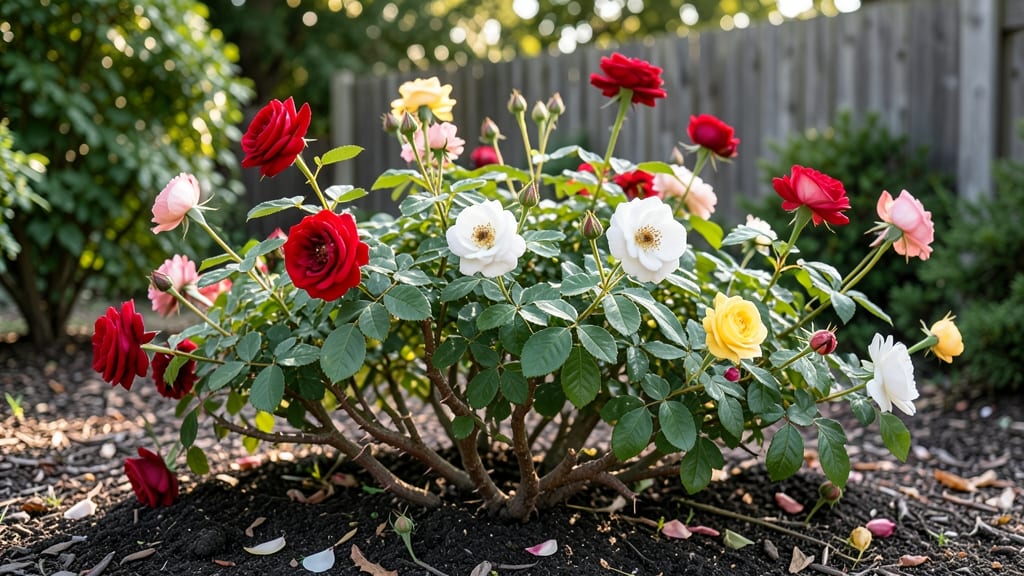
If you’ve ever stared at a towering rose bush and wondered, "How tall do rose trees grow?", you’re not alone—many gardeners face this question when planning their landscape.
The answer isn’t one-size-fits-all, though, because roses can range from compact 3-foot shrubs to dramatic 10-foot climbers, depending on the variety and care you provide.
Understanding your rose’s growth potential is the first step to creating the perfect garden space. Whether you’re dreaming of a romantic trellis 🌹 or a neatly pruned hedge, knowing how to manage height will save you time and frustration down the road.
The good news? With the right techniques, you can guide even the tallest roses to stay within your desired limits—without sacrificing those stunning blooms.
Pruning plays a huge role in controlling height, but it’s not the only factor. Soil quality, sunlight exposure, and even your watering habits can influence how quickly (or slowly) your roses reach their full potential.
In just three years, you can transform a wild, unruly bush into a well-behaved, manageable plant—if you know the secrets.
Ready to unlock the mystery of rose growth? Let’s dive into the types of roses, the pruning tricks that work, and the overlooked factors that determine whether your roses will stretch toward the sky or stay neatly contained. Your garden’s future starts here.


Natural height ranges of rose trees by type (and when they reach maximum growth)
Roses aren’t one-size-fits-all when it comes to height. Some varieties stretch toward the sky like climbing giants, while others stay neatly contained as compact shrubs. The key to controlling their growth starts with understanding their natural height ranges and how quickly they reach maturity.
For example, a climbing rose like 'New Dawn' can soar to 12–15 feet in ideal conditions, while a dwarf rose like 'Fairy' tops out at just 1–2 feet.
Most rose trees reach about 50–70% of their mature height by their third year, but this varies dramatically by type. Hybrid teas, the classic cut-flower roses, typically max out at 3–6 feet, while shrub roses like 'Knock Out' can grow 4–5 feet tall without aggressive pruning.
Even within the same category, sunlight exposure can push heights up by 30–50%—so a rose planted in full sun may dwarf one in partial shade.
Here’s how different rose types compare in height, including their growth rates and when they reach full size:
| Rose Type | Mature Height | Growth Rate (Year 1-3) | Time to Full Size |
|---|---|---|---|
| Climbing Roses | 10–20 ft | 3–6 ft/year (with support) | 3–5 years |
| Shrub Roses | 3–6 ft | 1–2 ft/year | 2–3 years |
| Hybrid Teas | 3–6 ft | 1–1.5 ft/year | 3–4 years |
| Dwarf Roses | 1–3 ft | 0.5–1 ft/year | 1–2 years |
| Standard Roses | 5–10 ft | 2–3 ft/year | 3–5 years |
🌹 Pro Tip: Climbing roses need trellises or arbors to reach their full height, while shrub roses grow bushier without support.
Sunlight is the #1 growth accelerator for roses. A hybrid tea rose in full sun might hit 6 feet in 3 years, while the same variety in partial shade could stay under 4 feet.
This is because sunlight triggers auxin production, a plant hormone that promotes vertical growth. If you’re aiming for a compact rose bush, consider planting in morning sun with afternoon shade to slow elongation.
Soil quality also plays a role. Roses planted in nutrient-rich, well-draining soil grow 20–30% faster than those in poor soil. For example, the 'Knock Out' rose, which typically reaches 4–5 feet, can exceed 6 feet if given phosphorus-heavy compost and regular deep watering.
Conversely, waterlogged or rocky soil stunts growth by restricting root development.
One misconception is that all roses need full sun. While most varieties thrive with 6+ hours of direct sunlight, some disease-resistant roses, like those bred for Zone 5 climates, can tolerate 4–5 hours of sun and still reach 70% of their expected height.
For instance, 'Dr. Huey', a popular shrub rose, grows 3–4 feet tall even in partial shade.
If you’re planning your garden layout, remember that spacing matters. Climbing roses need 8–10 feet of horizontal space to sprawl, while shrub roses can be planted 3–4 feet apart in rows. Overcrowding leads to competition for nutrients, which can reduce both height and bloom production.
For a low-maintenance rose garden, opt for dwarf varieties spaced 2–3 feet apart—they’ll stay manageable without pruning.
Pruning secrets to limit rose tree height without sacrificing blooms
Pruning isn’t just about shaping your rose bushes—it’s the secret weapon to controlling their height. With the right techniques, you can keep a climbing rose at 6 feet instead of 15 or a shrub rose at 3 feet instead of 8.
The key? Timing, tools, and targeted cuts. Start by pruning in late winter or early spring before new growth begins, and always use clean, sharp pruners to avoid disease.
For climbing roses, focus on selective tip-trimming to encourage lateral branches. Cut back the main stems by one-third to promote bushier growth, but leave at least 3-5 buds on each stem. This method keeps them manageable while preserving their vibrant blooms.
For shrub roses, prune more aggressively—cutting back one-third to one-half of the plant’s height—to maintain a compact shape without sacrificing flowers.
Step-by-Step Pruning Guide
- Step 1: Remove dead or diseased wood first—cut back to healthy growth.
- Step 2: Thin out crowded stems to improve airflow and reduce disease risk.
- Step 3: Cut back last year’s growth to 3-5 buds for climbers or one-third for shrubs.
- Step 4: Shape the plant by trimming errant branches to maintain your desired height.
- Step 5: Clean up pruned branches and sterilize tools with rubbing alcohol.
Timing is everything—prune climbing roses in late winter and shrub roses in early spring to avoid encouraging late-season growth that won’t harden off before winter. Avoid pruning in fall, as this can stimulate tender new growth that’s vulnerable to frost damage.
For hybrid tea roses, a lighter prune in summer can help control height while keeping them blooming.
Common mistakes like over-pruning or cutting too close to buds can stunt growth or reduce blooms. Always leave at least 3-5 buds on each stem—these buds will sprout into new branches.
If you accidentally cut too much, don’t panic; roses are resilient and will bounce back with proper care. Just adjust your approach in the next pruning session.
For container-grown roses, prune more frequently—every 4-6 weeks—to keep them compact. Root-bound roses grow slower naturally, so pruning helps maintain their size. Use balanced fertilizer after pruning to support new growth, and always water deeply to help the plant recover.
With consistent pruning, you can keep even the tallest roses at a manageable height without sacrificing their stunning blooms.
Remember, roses reward patience. If you prune correctly, your climbing rose might stay at 6 feet while still producing garden-filling blooms, and your shrub rose could remain a neat 3-foot hedge.
The key is consistency—prune at the right time, use the right tools, and your roses will stay lush, healthy, and perfectly sized for your space. 🌹