
How To
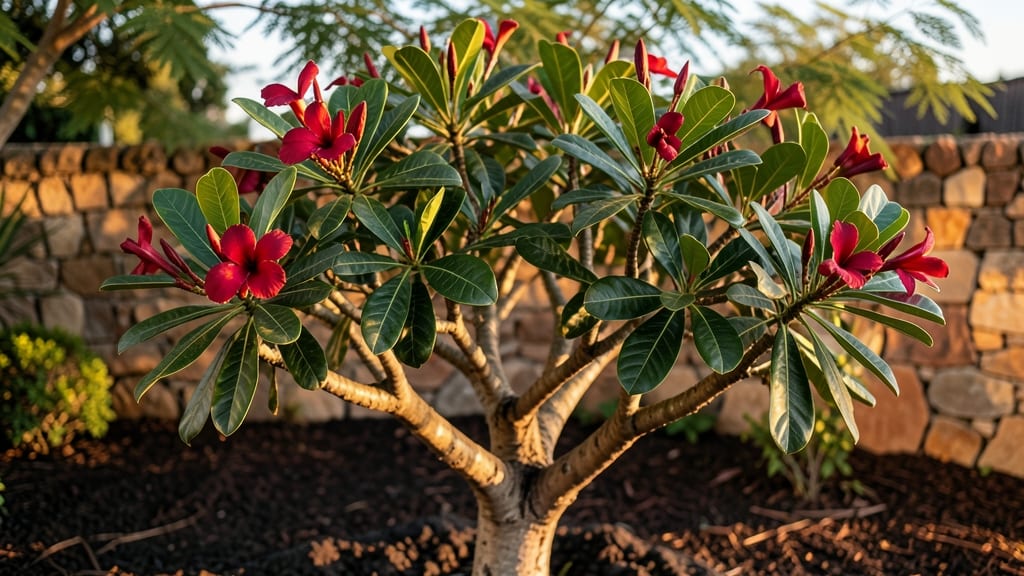
Wondering how tall does a plumeria tree grow before it becomes a backyard giant?
The answer depends on whether you’re growing a dwarf variety in a pot or letting a tropical beauty stretch its branches in your garden—some stay under 6 feet, while others reach towering heights of 15+ feet.
Your plumeria’s 🌺 height isn’t just about genetics—climate plays a huge role. In warm zones 10-11, these trees thrive outdoors, while colder climates force them into containers, keeping them more manageable. Even then, a single pruning session can trim years off their growth.
Here’s the good news: with the right care, you can shape your plumeria to fit your space. Whether you’re dreaming of a fragrant hedge or a showstopping centerpiece, I’ll break down the factors that control height—so you can enjoy your tropical beauty without the overgrowth.
Let’s explore how to keep your plumeria at the perfect height for your garden or patio, no matter where you live.


Plumeria tree height by variety: dwarf vs. standard growing habits
Choosing the right plumeria variety is the first step to controlling its height. Some types naturally stay small—like the dwarf plumeria—while others grow into towering specimens.
For example, the Plumeria rubra (red plumeria) can reach 15–20 feet in tropical climates, while the Plumeria obtusa (Hawaiian plumeria) typically maxes out at 8–12 feet. Your climate and pruning habits will also play a role in how tall your tree becomes.
If you’re limited on space, consider container-grown plumerias. Varieties like Plumeria pudica (dwarf white plumeria) thrive in pots and rarely exceed 4–6 feet tall. Even standard varieties can be kept compact with regular pruning.
The key is selecting a variety that matches your garden’s size and your willingness to maintain it.
Here’s a quick comparison of popular plumeria varieties and their mature heights to help you decide:
| Variety | Mature Height (ft) | Spread (ft) | Flowering Season | Best For |
|---|---|---|---|---|
| Plumeria rubra | 15–20 | 8–12 | Spring–Fall | Large gardens, tropical climates |
| Plumeria obtusa | 8–12 | 6–10 | Summer–Fall | Medium spaces, containers |
| Plumeria pudica | 4–6 | 3–5 | Year-round (tropical) | Small gardens, patios |
| Plumeria acutifolia | 10–15 | 7–10 | Summer–Early Fall | Tropical landscapes |
| Plumeria alba | 12–18 | 8–12 | Spring–Fall | Large containers, tropical climates |
| Plumeria ‘Ice Cream’ (hybrid) | 6–10 | 5–8 | Summer–Fall | Cold-hardy zones (9–10) |
Notice how dwarf varieties like Plumeria pudica are perfect for small spaces, while larger types need room to spread. If you’re growing plumerias in containers, choose a variety that won’t outgrow your pot. For example, a 5-gallon container can comfortably hold a Plumeria obtusa for years with proper pruning.
Another factor is growth rate. Plumerias grow 1–2 feet per year in ideal conditions, but this slows in cooler climates. If you’re in USDA Zone 9 or 10, expect slower growth compared to tropical Zone 11.
Patience is key—your plumeria will reward you with fragrant blooms even if it takes a few years to reach its full height.
For fastest growth, prioritize full sun exposure (6+ hours daily) and well-draining soil. Amend heavy clay with compost or sand to prevent root rot, which can stunt growth. If you’re growing plumerias in containers, use a mix of cactus/succulent soil with perlite for optimal drainage.
One common mistake is assuming all plumerias grow the same size. For instance, the Plumeria ‘Ice Cream’ hybrid is bred for cold tolerance and stays shorter than tropical varieties.
If you’re in a cooler climate, this hybrid is a great choice—it thrives in Zone 9–10 and rarely exceeds 8 feet tall.
Pro tip: If you love the look of plumerias but need a smaller
How climate zones affect plumeria height: cold tolerance & growth limits
Your plumeria’s height isn’t just about its variety—it’s also tied to your climate zone. In USDA Zones 10–12, where temperatures stay warm year-round, plumeria trees can reach their full 10–20 ft potential.
But in cooler zones like Zone 9, growth slows dramatically, often capping at 6–8 ft unless you protect it. Even a single frost can stunt a plumeria’s growth permanently.
Humidity plays a role too. High humidity (like in Florida or Hawaii) fuels faster growth, while dry climates (e.g., Arizona) may limit height to 8–12 ft. Sunlight is critical—plumerias need 6+ hours of direct sun daily to reach their maximum height.
Without enough light, they’ll stay stunted and leggy, rarely exceeding 6 ft, even in warm climates.
🌺
If you live in Zone 9 or cooler, your plumeria’s height will likely stay under 10 ft unless you grow it in a container and overwinter indoors.
Cold-hardy hybrids (like ‘Hawaiian Snow’) can tolerate brief dips to 30°F, but most varieties die back if temps drop below 40°F. In these zones, expect slower growth—sometimes only 1–2 ft per year—compared to 3–5 ft annually in tropical climates.
Common mistakes can shrink your plumeria further. Planting it in shade or poor soil stunts growth, while overwatering in winter (when roots slow down) invites root rot.
Even well-intentioned gardeners accidentally limit height by pruning too late in the season or using high-nitrogen fertilizer, which promotes leafy growth over vertical expansion.
💡 For cooler climates, focus on microclimates—like south-facing walls or greenhouses—to extend the growing season. A 10-gallon container can keep your plumeria under 8 ft even in Zone 9, while a whirlpool planter adds mobility to protect it from frost.
With the right care, you can still enjoy a fragrant, manageable-sized plumeria anywhere!
✂️